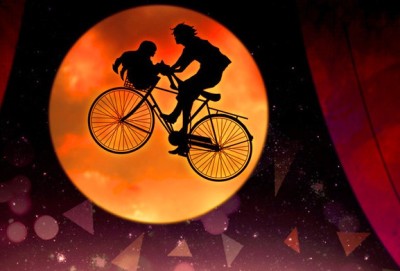
Back before people knew what moe was, there was sad girl in snow. Before there was Xzibit, people were putting cars in cars. So what do you call the thing today? What is this thang anyway?
Is White Album just a story banking on nostalgia (at least, for the 2008 anime)? What about White Album 2? The characters in it clearly has some strong associations with the “outputs” of the first anime, in-universe. When Rina and Yuki were going at it, these kids were, what, 8 years old? 14? I forget how many years it went by–either by anime continuity or game continuity? It’s pretty cool that Setsuna knows all of Rina’s songs, because that means her mom and dad are probably big fans of Rina Ogata in order to put up with that. Or, alternatively, it usually is the work of an older sibling or something, which we know Setsuna probably does not have.

Here’s another visual signal.
Ever go on Youtube and look for old videos of stuff? VHS era stuff? Yeah, this is totally that visual language talking. Like, I half expect every single Himikoden OP rip to have this, because like, DVDs were a thing but it predated that and it was one of those things you probably could Youtube for. Or, I don’t know, stuff that might have finally gotten DVD releases but only after so long, you know? Or, maybe, just cover it? I tried and didn’t find any VHS caps of Himikoden OP; just LD and DVD rips nowadays. But the idea persists if there’s an audience.
Enka is a genre that predates all this stuff, and it’s all this stuff. It’s definitely not what I’d call moe or whatever, but if we transpose the feeling from “a set of circumstances” to an icon, and if that icon happens to be a cute anime girl, then what? How do we manufacture wabi sabi? How can we convey feelings in general, for mass media entertainment?
Which brings me back to music. And White Album 2. I think music as a theme is one of the most powerful and succinct way to convey all of this, if not THE most. I suppose still mileage will vary from person to person. So White Album 2 quotes music from White Album, and that was just a stepping stone for two developing anison idols at the time, as each reach various degrees of fame–one got super famous, the other not so much–as of White Album 2. And in that gap of time, what happened to the people who played the game? Who sang the songs in karaoke? Are they waxing nostalgia watching kids singing their present lives in nostalgia-tinted lenses? Is this how we feel about Ogiso and Touma? That their personalities reminded us of things years ago? What’s actually happening in this show, its theme and atmosphere?