This applies only to the EN version. Meanwhile, have some Mayayan advertising the JP game.
Category Archives: Franchises
The Characro IDOLM@STER Cafe: A Guide of Sorts
[Update: they have revamped the reservation system somewhat, so this post is obsolete if you want to make a reservation. Good still for some history so you know why things are the way they are. Some info still are good, such as the slots.]

Characro is a … brand? How do you explain Namco’s side businesses in meatspace amusement? Anyway, there’s the IDOLM@STER Cafe in Tokyo that will probably run for the next foreseeable months. (That, and Tiger & Bunny, and Macross Frontier.) I went to the IM@S cafe a bunch of times, so I figured a guide & review is appropriate. Maybe I’ll cross-post it to HPT.
The cafe itself is no longer new & novel, since it started doing business last December, and the sheen is gone for Ps especially because it’s the kind of place you want to go a lot of times. The novelty can wear off fast if you do that. For me, I can stand to go there a few more times.
Oh, this is entirely different from the Cure Cafe Cinderella Girls tie-in, just to be clear.
Vitals:
Characro Cafe Akihabara (IM@S and T&B)
Home Page
How to go there (JP)
Address: 2 Chome-5-12 Kanda Surugadai BF-1, Chiyoda, Tokyo
[It’s across the street from Garten, which is a certain someone’s regular joint.]
The Need to Praise When & There’s Not Much to Say

I actually agree with this review, almost 100%, and want to make a corollary.  Author says great anime can’t be spoiled, but I think it goes a step farther: great anime doesn’t need to be talked about. Shirobako needs no advocacy, even if it’s always good. There’s no need to make a case for itself. In fact I had a hard time trying to do it. I could write about the simple stuff, like my first impression of Minami-san was that he’s a little intimidating. And I wonder what Maruyama-san’s cooking is like.
But in that sense it’s also a cheat in that as with all arts that are interpretive, we bring in as much as it brings us. The union between artwork and audience is no less sacred than the miracle of creativity in that sense. I think your experience as an anime nerd will not only play greatly, by referring to the art of the craft as the heart of its references it will disarm every late-night anime watcher, so most of us EN-speaking types can fall in line like all the JP viewers.
Perhaps the only thing equally difficult to keeping that spark and drive alive in salaryman life is being able to stay up and watch your late-night anime. Shirobako actually airs early enough in Tokyo that you can watch it before bed, but it takes some measure of dedication to get home and put it on, while not falling asleep watching it.
Action speaks louder than words, and it’s hard to find the words to describe it. I guess I did doze out during one particular viewing of episode 22 (since it’s kind of a filler to bring to 23?), largely to no fault of its own (a long day of touring + late night drinking + watching the raw). It’s like how I already internalized the “Taro,” the indifference of Hiraoka, and other representations in the office environment. Have you been working in such a thing long enough to see past it? Not just your own situation but the dramatized office of Musani? What is top shelf and what’s on the bar Shirobako serves its customers? Is your inner 10yo asleep?
But, because it’s such a cherished tale of animation production, based on a simple understanding of it that so few anime has taken on, it will stand as a classic just on that fact alone. Shirobako being entertaining enough to keep those otaku ossans awake late at night is just bonus.
PS. I found these tweets ironic. I guess it’s because PA Works tried very hard to make something that bucks the trend consistently. To say, for example, Hanasaku Iroha is following a J-drama formula misses the entire point that if not for PA Works being a studio that doesn’t chases after the latest trends (sup Glass Lips) that Shirobako even exists (see: the vol1 omake). They believe in their creators (Shirobako is very clear on this), and let them do what they think is best. Even if that means we have to sit through a Glass Lips now and then. And to be clear, this is a pervasive attitude-entitlement issue that manifests way too much among people who have opinions on entertainment, so my apologies to Toast for making an example out of him. It’s all of us. Buhiiiii.
Reeling in the Feels
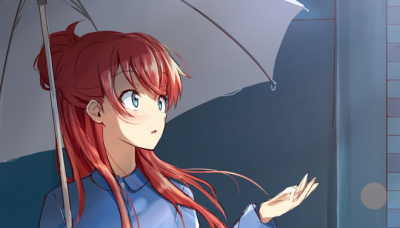
Shirobako got my tongue pretty well. Episode 23 was another outpouring moment in a lot of ways, and I’m not really done processing it. Too busy grinding Ace Combat for gold boxes and it refuses to give any. Hopefully both of these statuses will change for the better soon.
I have about a month’s backlog in terms of sites to read and shows to watch. Of them, I was able to keep on top of my favorites of the moment: Shirobako, Saekano and Log Horizon. It doesn’t mean anything about quality or some such as I previously thought, but it hopefully endorses them beyond a certain duty I felt as someone who still habitually watch 10+ shows a season and the need to “review crap.” FWIW, I just got done with KimiUso, probably more because there are advantages to shows that end a week early, so all these animubroggers have “wrapped it up” in such a way that compelled finishing it first, if just to avoid spoilers.
I also realized today I had a chance to visit the Shirobako collab at Musashino’s shopping street outside its JR stop on the Chuo while I was in Japan. I had a half-free day that I spent walking aimlessly looking for amps. Sigh. So to feel better about myself I end up working on the camote backlog, and run up against this entry. The name is not only familiar because of the seiyuu connection (as someone who visited ANN’s encyclopedia you wonder if people credit things correctly every now and then) but because of aforementioned ANN connection, sometimes I wondered what did the animator Tanaka do, and if it is noteworthy. Looks like she’s one of the core Ghibli types since the early Telecom days, so, yes.
[Wait they still have her credited in Pitaten storyboards lolol.]
No, reading camote brings more dread than joy, partly because it’s so dry and a lot of it is not too relevant to my interests. The relatively business-like imprints and being solid info makes them a good read to reel back the feels, as they say. It’s like when people complain about seasonal anime goodness, I’m like, what are they smoking? Shirobako has ran for 2 cours (almost), so it has been two really good seasons of anime. This is AOTY 2014 and it probably will be AOTY 2015 unless something else jumps out at me.
The reactionary response also prompts me one other thought: after episode 12, I was like, this anime is basically already really damn good, it can only screw up from this point on. And so far all it did was to repeat itself, which is more than what I can ask for. At the same time, seeing episode 23 play out makes a good wrap-up point that the first cour didn’t quite have. So are we all done here? I was done since last Christmas, so all of this is gravy really.
The word is that there is enough material planned for 2 more cour, where Aoi takes on the role of line producer, and then main producer. I guess those are stretch goals for those delicious blu-ray sales.
Sendai Pilgrimage 2015 Part A
[Some updates here, mainly that part of this write-up is obsolete because of the new day pass they have.]
Just going to memo down the key things. Hope you might find it useful. (Go to the bottom for a list.)