Category Archives: Modern Visual Culture

Girls On Film – Anime & Feminism

Sometimes I wonder: just how much media do you need to consume to get a good picture of what you’re talking about?

Is there space for the otaku academic? I don’t want to find out on my own…
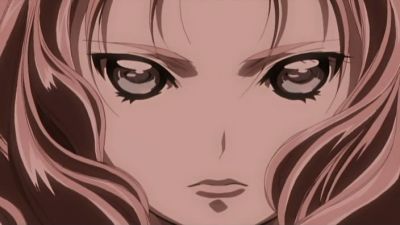
...a Neviril Scorned

The gender revolution in Japan underlies all of this talk. In the past several decade we’ve seen a lot of changes in the cultural, social, and even in economic and political realms regarding the role of women. Looking at this from the media consumer’s perspective is just one of the many lenses academics use. And when we talk about Japan, we gotta involve the “popular visual culture” or whatever namesake that one can make of from Genshiken.

But I think most people are finding that, for now, the change is modest when viewed from the lens of anime and manga. If anything, my own experience indicate as so.

In Zyl’s column we see that some people think this is so as well. I get the feeling this is so because the way Japanese media works–being as corporate and entrenched by big money as the rest of the industry world-wide (most notably in the US). The point continues in the treatment of the academic literature about women and their reflection in popular media, in manga and anime. The old fogies opining inside their ivory towers? Not at all an unusual thing. Especially when we’re looking at groups where women are rare and few. Even more so when we’re looking at anime that is marketed primarily to men. Most anime are adaptations from shounen and seinen manga, after all, especially the ones that make it across the language divide.

I’m going to spin some of my reactions from Zyl’s column and the subsequent comments out in the remainder of this post.

First: Just what makes a good example for the feminist empowerment concept as a character in anime? Commonly western scholars point to Miyazaki’s heroines–often Chihiro from Spirited Away and San from Mononoke Hime. I guess not enough people have seen Howl’s Sophie but I think she is way better as an example.

Age. Sophie conducts herself as a young adult; San and Chihiro are still notably childish. Being child-like isn’t really anything that is particularly poignant, and that’s the problem with spinning a feminist critique from a child, even if she is a female. It’s not really probative. Perhaps another example along with Sophie is Kiki. I’m not so sure about Nausicaa, and that’s because, well, we’ll get to it in a bit.

Gender-based achievement. One problem that bothered me with Chihiro as an example was that many of the things she did was something that any attention-paying, careful and thorough child could have done. If Gillian Anderson’s Wolf-God in Mononoke adopted a boy instead of a girl, will San remain the same? I think as a movie, no, but as a character and a plot device, probably yes. On the other hand, I just can’t say the same about Sophie, and maybe even for Kiki (but there’s more wiggle space there).

The role of gender in the film. I think Kinsella definitely has pointed out something awesome about Spirited Away and its parallel to the whore houses of days old. I think customarily it would have been odd for a boy to work in the capacity Chihiro has, although it was fancifully ambiguous in the context of the film. I think, however, you can construe that point either way in regards to the cultural significance and the interplay of the female gender in today’s society. The traditional chinese tale that was the original work for Disney’s adaptation of Mulan tells probably a similar message about piety and both celebrates female ingenuity, tenacity, and overcoming dire difficulties. The question is just that–is gender role merely yet another difficulty that both of these heroines overcame? I think my objection with Nausicaa also has to do with this. As to San, I think she acts as a foil for Ashitaka, but again, I didn’t think she was a she for much anything particular, maybe only to highlight that romantic undertone.

But enough Ghibli bashing. I’m sure we can find some wholesome, positive examples (Eboshi Gozen, for instance) outside of the flagship North American Ghibli titles. My point is we shouldn’t just look so superfically and we should apply some healthy dose of context.

Second: The role of men. I think when we talk about women we also have to talk about men. This is particularly a point that shows up when someone raises Major Motoko Kusanagi. She’s a girl in a boy’s world. I think no matter where you look in real life, there are always more male law-enforcement folks than female. Her rag-tag team of ex-military coupled with Aramaki’s politicking says a lot of things about…politics (yet another male-dominant field). The oddity of the Major’s disposition, in a setting that resonant with real life’s tendency to repeat these same sociological makeup, may be making a point. Kinesella says it’s fantasy-fulfillment, it’s a bunch of “phallic girls.” I can’t see how it can be truer for Ghost in the Shell.

But I think there’s also something to be said that in the Ghost in the Shell TV series, we see a slightly different Motoko Kusanagi. What comes to my mind is the motherhood episode, but outside of that it’s really a dog-eat-dog world, and the Major uses her sex appeal and gender positioning as a tool to manipulate.

Still, compare Ghost in the Shell with any of your standard fair, girls-with-guns, it makes you wonder. Maybe oldies like Gun Smith Cats comes closer? Or should we just go straight to Black Lagoon? Or…

Third: Urosukidouji–or alternatively, let’s pick the right show to talk feminism. I think it makes almost no sense to use, say, Aria THE ANIMATION. It makes some sense to use Naruto and One Piece. It makes even more sense to use Paprika, but probably not much sense to use Ghost in the Shell: Innocence. What criterias am I looking at?

Who is going to watch it: Paprika is an arthouse film, but it’s based on a renowned sci-fi author’s work in Japan. It also focuses on, heh, gender roles. One Piece has a HUGE fangirl-base, and Naruto has some. Aria is escapist seinen fantasy. GITS: Innocence is another arthouse film, but it is one that is fully preoccupied in telling/saying one very specific set of things.

What it’s about/what does it say: Paprika is about the story of a woman coming to terms with herself in a maze of dreams, realities, networked dreams, a chain of real-life mysteries involving life and death. Aria is about girls in a fantasy Venice learning to be gondola operators / tour guides. One Piece is about pirates and “getting crew and loot.” Naruto is a teenage self-redemptive story. GITS: Innocence is about a detective learning to cope with a new reality with his good friend and ex-partner who turned into a … computer thing, while solving a criminal mystery.

I think part of the problem, as my first couple paragraphs alluded…is just that the academia seems to just lack that beef with the familiarity of these works. You have to not just tap into the otaku pulse, but actually watch the shows and read the books they tell you about. If we’re going to use this lens seriously, we need not only people who has the academic wherewithal but also someone who has already been looking through the lens in its full glory.

There is probably more to be said on this. Like being able to naturally reassign your sex at 17 is one of the most empowering things that can happen to a girl. Talk about a feminist subtext!


The Curse of Un-Moe

When I read a typical figure review at RIUVA, for example, I get bothered by the shameless, fiery passion some people get with whatever the latest polymer idol being reviewed. I think that’s just a fact of life. It’s like talking to some colleagues to kill time, and they go on about something you either dislike talking about or disagree–for example, “Jessica Alba is hawt.” But who am I to say no? I have my own eccentricities as well, and they’re probably less commonly shared than popular idols and actresses.

But what bothers me is how anime fans, by and large, falls into very predictable herds when it comes to “liking” a character design. The oldest memory I have of this was from Escaflowne, and this complaint repeats itself with Nobuteru Yuki’s other works. “Who cares about their noses,” I thought. My opinion of his stuff is pretty high–at least, until he started to recycle his Hitomi designs. Many of them looks full of life, and his faces are expressive because the various elements work together. That’s on top of the fact that his designs are more detail-oriented.

In the age of moe, inoffensive, cookie-cutter designs are the way to go. No one complaints about droopy eyes. Or lacking lips. Or having no nose (this one is kind of across-the-board). Or zettai ryouiki overload. Or having little detail on the rest of the character outside their hair and eyes. Gotta pander and make your show accessible, after all?

So when I tell people “Red Garden is gorgeous!” I actually get weird looks. Pretty? Yeah, it’s by far the prettiest anime this season (Kanon not withstanding). The colors are strong and that highlights its goth-emo tendencies (the Rozen Maiden team is on it, after all). The heavy lines, the angle used (most evident in those scenes when the characters walk down the hallway), the shameless pandering to mood with sweeping landscape shots of the upper east side?

Well, ignoring two very serious problems with Red Garden–its overly superficial take on American school life and excess emo–it has one very interesting packaging. As of 3 episodes I can’t say much about the rest of the show and the depth of it, but even now having seen episode 3 and by rewatching the first two, I am already picking up points of internal consistencies that I missed the first time around. It is meticulous.

But of course, God forbid the use of thick lines in character art in anime. Even more so having to animate something without the use of moe dynamics. I think it’s more than just preferences and eccentricities when something that’s honestly quality gets slammed for being different.

Rocking for Red Garden to Rock the Status Quo? Rock the LM.C!


Hetare no Houkou

Asatte no Houkou needs no one to sing to it praises. So I will try not to.

Hawt Loli

In some ways the best thing about Asahou(?) is that there’s an element of uncertainty. The premise itself is the kind that leaves the viewer with a strong impression. We know that Shoko and Hiro were ex’s that parted on odd terms, and it’s uncertain what has transpired before and after their unfortunate parting, in respect to Shoko’s current state of mind. We also see some kind of odd sisu-con mixed with the idea that Hiro is just trying to be a father at the same time. Lastly we really don’t know what’s going on in Harada’s head, but we can guess to some success–that it is a state of adolescence arriving too early for an elementary schooler. She learns fast from her brother, in that both of them hold back when they probably shouldn’t, and they act like big babies.

I think that’s my problem, on the other hand. I suppose it’s a curse at the same time that I can’t help but to think and apply genre tropes to a show like this. Asahou gives me so much on the plate that I’ve already constructed something and set a bar, an expectation, to what the story has to achieve. And in my mind, I’m thinking if the story is masterful, it will construct a build-up and resolution superior to what I imagine. Even more masterful is when the story do that to misdirect, and later surprise its audience who thinks like I do.

But I don’t want to do that to a show, and the show deserves better. We can concede that the artistic direction and general quality to Asatte no Houkou is pretty good. We can expect drama, and we can expect some kind of heartful end involving the reversal of the fantasy-coming-true. But is that it? I am doomed to be unable to enjoy this show as a slice-of-life mood piece because it places on the plate, front and center, a dramatic plot. (Not to say Asahou is a slice of life show.) I have to care for it in abandonment of just sitting back, not caring, and enjoying the ride. It preoccupies the mind.

And when the grey matter goes on, it doesn’t stop until it’s done! Argh.

Still, I think it’s a real danger. If indeed Asahou does not play itself out to be as good as I think it can be, I will probably end up disliking the show. It’s not to say that will happen, but it’s now more likely, only because of how the first episode turns out.


When Character Development Pisses Me Off…

Sometimes a great story pisses me off because of one little thing. The fly in the ointment.

L stands for Lame

When we’re talking about a movie or a TV show, there is more room, more possibilities to annoy. With a written piece, at the very most, the pensmanship can get in the way. In an anime it can go from terrible music to voice acting to an odd character design.

But there is something worse than all of that. Something much more fundamental. In fact, nothing pisses me off more than a strawman that is not only not disguised, but obviously elevated, highlighted, and having neon lights pointing at it, saying “LOL WATCH MY CARTHARTIC MOMENT 20 EPISODES LATER!” that is typical of the mainstream, serious genre of action and drama. It’s like the show first kicks me in the groin and then reassures me I’ll feel better after I finish the show. Right.

What do I mean by that? Like Ed from FMA; or Light from the recent favorite Death Note. I’m going to use these two as examples, but there are many more out there. I’m also going to contrast it with an example to the contrary, like Yoko from Twelve Kingdoms.

Let’s look at Light first. He is passionate about his notion of justice and his notion of idealism, but obviously out of boredom he takes those ideas way too far. As the main character, his drama will drive the story as well as the various themes to the show. These motivations are fine and all, but I think every time when he mentions anything about crime, punishment, or justice, a little bit of me died inside BECAUSE IT IS SO DUMB.

To dwell on this point a little more, when I said strawman a few paragraphs up there, I mean it exactly that. The writer to the story sets up a character or a symbolic concept within the story that mirrors a position on a grey, moral issue. However when it’s established in a “round” character, this character has to grapple with this position and over the course of the story, change his opinion on this moral position and gain a better understanding behind the overall topic. The writer, knowing that there will be this change, will often set up the main character on a basis that is outright wrong, or overly idealistic or emotional, because this position is just a strawman for the story to attack and abandon later on.

Likewise in FMA, as the story progresses, Ed learns more about what his world is all about, and uncovers things that changes his understanding. Yep. OHNOES SCIENCE > J00? Give me a break.

On the other hand, Yoko Nakajima, as we all know, is kind of this sheltered girl with the same problems similar to Light’s problems. The differences in their abilities may give them different reasons to respond to the same, commonly critiqued Japanese school life experience, but both are annoying characters at first. I think Light goes as far as to embrace from one bad stereotype (the phony, perfect good-doer) to a worse one (a remorseless criminal), while Yoko goes from one common stereotype (whiny, irresponsible girl) to something that’s much more “well rounded”–a person who knows her place and has her moment of carthasis.

Of course, it’s expected that Light will run into the same, and Death Note is just building it up; but when the bulk of the story is about Macbeth fighting off his eventual fate rather than his spiraling down into corruption, to draw a parallel example, it acts as if the story is walking away from resolution and into the void. There is nothing that holds me to be sympathetic to Light. Yoko, on the other hand, is a mostly-helpless girl in a strange land and has to fight to survive, and she wises up accordingly.

To sum it up:

1. Hubris is to be realized over time, not explained from the onset.

2. Sympathy is important if you want the audience to care.

Of course, the fact that both Death Note and Full Metal Alchemist are very popular shows would suggest that my view is wrong, or a minority view. I don’t think that’s necessarily the case, of course, since both shows boast large marketing efforts, high production value, as well as interesting plots, set-up, and secondary characters. But I just can’t get past the highly artificial, semi-predictable, kick in the groin. It’s sooooo 3rd rate. It’s what you expect from crappy Hollywood summer blockbuster-wannabes.


Kanon: あさだよ~

Kanon isn’t having its first bandwagon with Kanon 2006. This is probably the third time it has happened.

But life with Web 2.0 is different than life without. There’s this Kanon tracker for starters.

Monday Night Football

I know Mariko Kouda has done several rendition of “Asa, asa da yo~” and I could have swore that I have a clean copy somewhere from back in the days when Kanon was hot stuff, but I can’t find it now. While it’s too bad that I can’t just loop that little clip of moe history on my playlist, I want to check if that clip is the same as the one Kyoani used in their remake. Admittedly by episode two I was weirded out because you could tell the room reverb in the show between when they were talking in the open areas inside school versus inside the classroom or hallways. I suppose some kind of “alarm clock recorder” filter got used there too, but I wanted to check.

So, if you got a copy of that somewhere, help a brother out? You can have this slightly cleaned up “WHAT ALL MY BASE ARE BELONG TO NAYUKI?!” in exchange.

[update: yay now you can listen how Mariko Kouda gets slower over time: all three in a zip]