Category Archives: Franchises

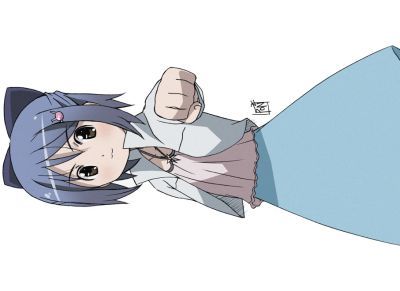
Sola Matsuri

Sola means a lot of things.

It can refer to the sky in the Engrish-‘sora’ sort of way. And obviously the connection between Sola and sky is quite clear, symbolic of what Matsuri has forgotten in her eternal journey of selflessness. The flashback to “LOL I remembered that it’s nice to have friends” bit is…well, very much about the sky that she has forgotten, and it’s a replay of when she recalls what it was like when she step into Yorito’s room. The sky is also a symbol of Yorito’s promise, which is fulfilled (in the lovingly SHOCKING TWIST fashion that makes AIR so good) when the broken-down film projector kicks in, and all that shizzat.

And speaking of AIR, the sky is full of air. Seeing that the scenarist behind Sola is the one behind Key’s successful hit games, the connection is, if anything, blatant. Sola is of AIR. Sola is also full of something else, especially episode 12…..anyways.

But I think Sola means being alone (Latin?). If you pay attention to the OP, in a way, it confirms that being alone is the best definition for the term as the show’s title. The series revolves around Matsuri’s loneliness issue and how it affects both her and the people connected to her. The lonely stroll under a rainy sky is a cute play-on-word.

And a cute play is so far what has transpired in the past 12 episodes. It was fun, it oozed with a good feeling; sort of like how Aria or Texhnolyze ooze with mood. I don’t think Sola can really disappoint with its final curtain draw now. A job well done so far, although not with its flaws.


Jokes On A Curve

Hypothesis: the jokes in Lucky Star are curved.

curved, not straight (or sideways)

Okay, no one is fooling anyone by saying that Lucky Star is a popular show on the air right now. But given its panel-comic format with a dash of slice-of-life, why do people like to look for reasons beyond the show itself to explain its popularity? I’m not sure, but is that a sign of the lackluster nature of this skirt-wriggling mess?

I guess that’s how it started. Lucky Star’s shotgun approach to entertainment may be the real cause of it all. The show aims to please a large segment of viewers in two ways, even when it’s in the guise of otaku entertainment.

First, it gives us a wide variety of things to talk about. No matter if you’re a chat-brain otaku or someone more sensible, you can find something to admire within its confines. Well, as much as a slice-of-life high-school comedy could. It is sort of like a second-rate but popular webcomic, but much more intelligent in its planning.

Second, it presents its jokes on a curve. What do I mean by this? Let’s say there’s 20 minutes per episode of Lucky Star. For about 10 minutes of the show, spread across the episode, we have fairly standard situational comedy jokes where the girls explain a simple, everyday things, and we get our lukewarm punchlines. For about 6-7 minutes each episode, LS presents jokes that refers to culture more, such as the Christmas Cake one, or the one about moe. Those are probably not as accessible to people as the ones talking about which side of a choco coronet is the head, although you might find the latter less funny. For about 3-4 minutes we get the more otaku-like jokes, like ones talking about events or Action Hero Animate or what have you.

The point here is even if Lucky Star is a very otaku-minded show most people can enjoy the bulk of it. There are about an equal number of jokes for both the initiated and the initiated’s friend. It may take a real 2ch goon to get all of it, but it doesn’t take a 2ch goon to laugh at it and enjoy it.

(Yeah, Lucky Star’s power to pander to the lowest common denominator wins. The OP has preordained this.)

Perhaps a second question worth exploring is: just how much of anime a typical viewer understands? It’s not exactly rocket science. And it seems to not matter.


Kamichu Is Really Good

Working on my “short” list of things to watch when I have the time, as recommended by others and reaffirmed by my own investigation and feelings, I’m nearly done with this ZOMG HOW CAN IT BE show. Yea, Kamichu, the high-production-value slice-of-life series from 2 summers ago.

If you read reviews like how this guy writes it, then this sort of show will probably get labeled as some kind of “little gem,” “nice find” or something flattering but not really deserving your full attention. And case in point; he hasn’t even “found out” about this show yet.

And it bothers me–not that he hasn’t, but so few people did generally. And it isn’t really off to say that Kamichu is a “little gem” or what have you. To translate it into specific, non-layman,  critic-language, the overall enjoyment value (as Star Crossed seems to do reviews around that perspective) of Kamichu is actually relatively low for the mainstream viewer. It is by no means a page turner; it is very much a show aimed at an older crowd who knows a thing or two about politics, history, and their heritage (as Japanese…and maybe other cultures too). The fact that it’s about a bunch of 8th graders in Hiroshima back in the 1980s isn’t going to hit home for most people.

But to call it a gem is injustice. It’s not even a “diamond in the rough” but just plain-o diamond. It is episodic–so automatically that’ll turn away probably half of the western anime fans who feed on serial discourse and plot-driven stories. It’s masterful. It’s cute. It’s just oozing with goodness (albeit also often mixed with some sort of awkward pitch at…some kind of nasty subcultural segment–lolicons, sisucons, even hardcore Japanese right-wingers?). It wins awards.

Strangely enough I remained unconvinced of all the things I just said, in a way, at least until last week. Well, if you asked me back in 2006 if Kamichu was any good, I wouldn’t hesitant to say yes. But it wasn’t compelling for me; I had seen just the first half of the series at the time and while I can recognize that Kamichu is that rare little gem, it isn’t anything that special to me. Heck, it’s a 2005 series that I had seen only half of by 2007. I didn’t feel the magic.

But after watching the episode about Miko and Shoukichi I was floored. If Asatte no Houko episode 8 did anything for you, then you’ll see that this episode of Kamichu is a reprise (well, Kamichu came first), but with sugar on top. They managed to express as much in your usual 22 minutes of late-night TV as a typical arthouse OAV could.

And perhaps “arthouse” is the right qualifier for Kamichu. It hasn’t transcended below the ceiling of common, everyday sensibilities in the way how Azumanga Daioh (or better yet, Yotsuba&) was able to translate its strange worldview in a way we all understand. It paints a picture of adolescence that is wrapped and coated by its slice-of-life tension (ie. not much) and all that ZOMG-She-Is-God nonsense that is a little bit “out there” to say the least. But for those of us who can see beyond that, Kamichu is a masterful reprise of a childhood to remember and the fun people had growing up. It’s just too bad most people are hung up with the details, like myself, to go far enough and see Kamichu for what it is. But hey, I eventually got past it. Thanks a lot to those people who did see it and push it like the mad good anime that it is!

It easily is one of the best anime anyone can buy right now in the US I think. If you call yourself a slice-of-life fan, well, add this to your “very short list” already!


Phisicalqantity Alternation Natural Deconstruction Organized Research ARRRRGGGUUUUHHHH

Killing me softly with crappy Engrish, yep.

What’s in a name? A whole lot, if you are keeping tabs on the gay marriage debate going on in the United States. But Darker than Black’s wrangling of PANDORA is just plain gay.

The past semester at school I worked with a client who is an aspiring writer. She came up with all kinds of neat words that are mnemonics for phrases–all of them actually made a lot of sense if you read them in full. Well, no duh, she has to make sales pitches to potential investors and publishers (and lawyers) who will work with her and believe in the causes she is working for. And give her money. And she lives in an English-speaking society necessarily requires that, well, you can’t use Engrish if you are serious about being a writer.

Ugh.

The thing is, is it really that hard to come up with a good … thing for PANDORA? What in the world is “Phisicalquantity”? Why must you do this, Japan? There’s NO EXCUSES if like, half of your industry revenue comes from abroad. Especially with a title like this.

UNINSTALL, UNINSTALL.

I mean, I would have been fine if no one ever explains to me what the hell PANDORA stood for. I would have been just fine if I didn’t know what HiME stood for (although that actually made some sense), but the Engrish was a good LOL for a show that isn’t to be taken seriously. Maybe we shouldn’t take DTB seriously?

And you would think after decades of anime watching I would care less about this crap. But alas.


Minoru Shiraishi Makes Me Proud

…to be a fanboy.

Because, after all, that’s how we get our grooves on. There’s no reason to adhere some preconceived notion of protocol and trivia. Granted it can be tiresome and bad for our bottom lines, spending our time and attention on trivia and coining words and phrases on the border of meme and fad, walking that preciptious edge a step away from the bottomless abyss of intarweb lunacy.

“Rise up,” Shiraishi said. And I think we will respond.

It’s no surprise that Shiraishi talks about this so-called “tsundere.” Lucky Star pays attention to that sort of thing, and within the bounds of its suspended reality we have at least one. No surprise there, Kagami?

But a rousing speech from this semi-important gag character is the least you’d expect. Albeit it is still a bit of a genre trope… a celebration of geek independence. We speak our own language, breath our own culture, and produce our own information products.

Don’t let the elitist know-it-all get you down! Rise up, cling to your own sense of justice, but also reason grounded in common-sense! Talk about tsundere!