A recent Gizmodo story about the first webcam kind of put the final spin on this Maoyu post. Supposedly the first webcam invented (I guess this is subject to some controversy) was made for the purpose to monitor a coffee machine, to see if it runs out before some U of Cambridge guys head to the kitchen. It’s a humorous story, but I think this is not the first time that I heard the dark beans driving technological progress.
Coffee has a hand in a much bigger event–the Renaissance. I suppose this is why Italians still set the standard for this cursed but magical drink (and its derivatives)? But it’s commonly thought that it was no coincidence that Europe’s caffeine intake went up as people switched from drinking stouts and ale to coffee, in correlation with the historic outpouring of cultural and scientific development of Europe in the 15th and 16th century. [Read more here, but it’s still just speculation.]
At the same time, coffee is one of those trade crops that can only be grown in the tropical zones. It’s a part of the economic motivator driving colonialism in the, well, age of colonialism. In some ways, today’s global coffee trade is not all that different than the patterns that were beginning from the 17th and 18th century.
Compare that with Maoyu’s super crop: Potato.
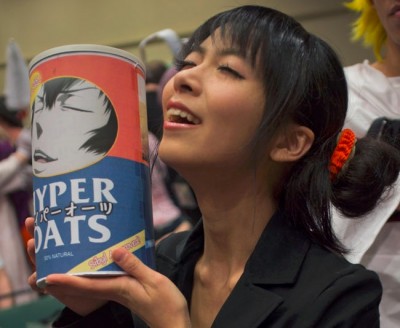
[Or for bonus points, LOL, Hyper Oats. And I’m not even fully joking.]
In a lot of ways that’s where the magic happens in Maoyu. Simple but fundamentally revolutionary technological advances in agriculture can transform a world, bottom up. Actually the whole bottom-up approach to change is almost heart-warming to see. People no longer starve to death, and can thus spend more time engaging in education, civics, arts and trade. It’s the key formula to prosperity and the starting point of today’s socio-economic baseline.
How Maoyu paints this pretty image is done with a lot of magic, in the literal sense. Maybe that’s well and good. The cover that Maoyu’s magic flies under is that traditional sword and sorcery don’t cure societal ills–those things give a man a fish, but don’t teach him how to fish. The transformation of worlds in Maoyu gets a barometric representation in the life of the Big Sister Maid, who had to start learning from the point that she doesn’t know that she doesn’t know. It’s a convenient way to show us what society needs next.
This is where I kind of wish the story takes a turn and Maid Ane gets romantically hitched or something, in order to illustrate how complicated the sort of socio-economic changes just the Southern Kingdom has to go through to get to where it is at the end of the TV series.
I say this because in a lot of ways, from hindsight, Maoyu is too fantastic. It’s as smooth as the illusion of solutionism but framed in the fantasy of a nonexistent history. Of course it makes sense and everything works–because it’s built from the ground up by reverse engineering popular nerd hypotheticals. That is partly why I think Maoyu is brilliant otaku entertainment.  But mankind’s history is not some neat and bootstrapped magical adventure. Watching Maoyu do the magic pill to solve the problem of “third worlds” feels like it simply fails to tackle all the hard issues, and instead only go for the things nerds are comfortable in talking about.
It’s the things like how open-minded other educated elites in the human worlds are, or that the winter king (and his son) happens to be “good guys.” Or how the role of churches in Maoyu is barely a shadow of the role of churches in Europe during the 12th to 18th century. It’s all just too convenient.
My biggest pet peeve in this game is racism. I actually don’t blame Maoyu for basically sidestepping this issue, because I don’t really expect Japan to be able to handle it at any level of competence. What gets me is how people who actually think racism is a theme in the story. I mean, sure, it kind of is, but they never really deal with it. If there’s anything to take away from Maoyu about racism, is that it’s kind of the awkward, invisible gorilla in the room.
Anyway, being the solutionist nerd that I am, I quite enjoyed Maoyu. It’s definitely a feel-good piece. At the same time I feel it’s exactly the comfortable trap that too many people don’t realize that it can be. Maoyu is a fantasy in a post-modern sense, in every way. I just hope those who enjoy the show know that it’s all an illusion. You can’t have a story about potato revolutionizing the world without a great potato blight (and that’s your Psycho-Pass quiz answer). Just like how you can’t have a story about coffee changing the face of the world forever without talking about colonialism or fair trade or any of the subsequent issues. Until magic can turn villains into heroes, Maoyu’s application to reality is largely novel and questionably practical, much like how the Demon King … stopped being one.
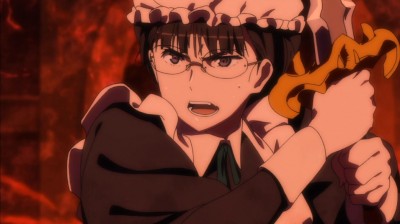
PS. When I saw this scene in Maoyu 11, I felt like the two kids at the end of every Space Bros episode: Kakkoiiiii!