Category Archives: English Language Modern Visual Fandom

Final Fantasy XIV and Game Food Culture

Marielle & THE NINJA

American food culture is horrible. I don’t think pointing at gamer food drives home the point, because it’s more an ironic ludicrous nonsense sort of thing. What it does show is that how corporate marketing drives food culture in America, so much so, that it dominates the mainstream thought; it’s more about profits than refinement of arts. The point I want to make, though, is that we will probably never see a US-developed game with a food culture as rich as, say, Final Fantasy XIV.

I mean, seriously. Take a look at this list–this is just what people can create at a few months since launch of the game. I mean, like, ugh, it makes me hungry while playing. Speaking of which, no thanks to Log Horizon, I took the plunge to another MMORPG. I hope it doesn’t impact my productivity–veteran MMORPG players don’t just know how to play the game, they know how to control themselves…right? And I think that’s my problem with Log Horizon (or why it’s great): playing an actual game with friends is just that much better of an experience. On the other hand, for people in the peanut gallery, maybe they can wax nostalgia hard to it. I sure did. The story itself is interesting but what can I say? It’s just one story, told by an NHK anime. You either find it appealing or not. It’s not really special; just like how everyone out of the hundreds of thousands of people playing FFXIV has his or her own story.

Anyway, FFXIV has a pineapple pound cake in it for crying out loud. I mean, when’s the last time your average CODer had some cheese souffle? I don’t even remember the last time I’ve had a pineapple pound cake, and I eat a lot of different sort of things all the time. This is like, Japan’s best foot forward for an internationally appealing audience. And it’s very similar what you’d see at a world-class Japanese food establishment, if you get what I’m getting at. This is their food culture, and it kicks the crap out of ours. It’s not to say Americans don’t eat well or don’t have delicious foods, but the issue is that unless you watch, say, Bizarre Foods America, you would have no idea what’s actually delicious that can be had in the US outside your local area. There is a different “food culture” in the US, but it’s a far departure from mainstream US food culture. More relevantly, the delicious part of American food culture is not glamorous or fashionable. So instead you have companies trying to create the Lowest Common Denominator sort of an appeal, and what you get is 20th century-style mass produced stuff that tastes pretty good, but is a far cry from what Americans can actually create in terms of a culinary heart & soul sort of thing.

It would be pretty neat if playing FFXIV means eating gamer food appropriate to the game. Mmm grilled trout. And this is also why food is a plot point in Log Horizon. I hate to say this but food culture might actually be one thing that anime has that western equivalent lacks.

And here is another thing: crafting MMORPGs. You know FFXIV is a big budget game when it incorporates the most elaborate crafting system in a standard dungeon-and-adventures type game. This is yet another thing I don’t expect most western MMORPGs to get. A good crafting game is not exactly a sandbox game like Minecraft or Second Life. Or I should say, in the genre of crafting MMORPGs, freer is not always better. I think of these more limited-form crafting games as a form of gameplay themselves, more along the lines of say, EVE Online, where the gameplay come in a more holistic sense with regards to player economy and other aspects of the game (means of using the goods or creating an epic item for example, desire and demand for trade goods and skills).  In short, crafting should be a game in itself. It’s like going into a dungeon, except it feels like a series of quests where your trade skill mettle is being tested, rather than clicking on plus signs to unlock talent trees or learn new spells.

It’s a bit like tabletop D&D where you need the right reagent to cast spells. Reagents are dumb these days, but only as a requirement for common spells. They ought to be how we look at trade skills–in a lot of ways that’s how modern MMORPGs treat trade skills. I think a successful crafting system has to marry both of these aspects.

Space Heaters

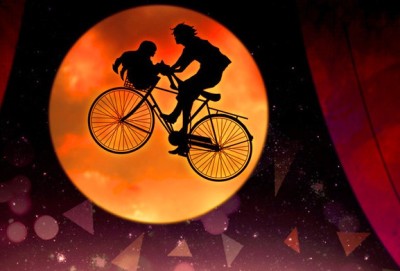
Mamachari aside, from Ask John:

For example, contemporary Japan places a fairly heavy emphasis on consciousness of the greenhouse effect, leading Japanese homes to exclude central heating and Japanese residents to hesitate running their “aircon” air conditioning systems for fear of depleting the ozone layer.

Really?

et

Since 3/11, isn’t the point of cutting back on AC to save electricity, since there’s a shortage? And the central heating thing… I’ll cut him some slack because he lives in Florida, so he probably hasn’t had to pay the heating bills for a New England winter, for a house over 90 years old…

What I do want to know and discuss is the nature of conservation in the Asian consciousness in light of the question being posed: why do Japanese homes use space heating rather than centralized heating? Well for one, my hypo is just common sense: it’s a matter of cost and economic development in terms of construction of private properties. Old houses don’t have central heating (or cooling) by default, so there needs to be some incentive for people to add them. in the US, old houses have central heating/cooling often because it’s the law, and also because nobody would buy such a house without central heating and cooling. Central HVAC is considered a standard feature in single family homes today, and even in most apartment housing. It’s less so for single-room apartments and dorm rooms, since it also makes sense to just use room-size heating and cooling solutions in those cases. Of course, in general, good, up-to-date HVAC solutions will save energy AND money in the long term than relying on portable space heating and cooling. But this is balanced by the nature of space usage in that heating and cooling compartmentally saves energy because you are only warming up or cooling down the room of the house you are in, and for most people (especially nuclear families with few/no kids, and singles) they tend to stay in the same room the whole time they are home, like 95+% of the time in the same room. You might get up to go to another room many times, but in terms of time spent it’s pretty extreme. Of course this is not even true in some cases, such as rooms with high ceilings or very efficiently designed HVAC systems, but usually that’s the case.

So here’s the funny thing, space heating is probably a lot more efficient, from an energy use point of view, in places like rural Japan or suburban America, because space is plentiful and houses are bigger, with more rooms. In urban Japan it makes less sense because your 4.5 tatami dorm is pithy small to begin with, it’s not a whole lot more power to heat up 4 or 5 of them versus what you can save in terms of energy efficiency by using a larger scale HVAC system. If you live in a flat or something, space heating gives you the option of controlling the local temperature to what you like, but it’s overall less efficient. Unless, I guess, an apartment building don’t have full occupancy and then space heating will save, under some breaking point of occupancy.

I suppose this could also be a matter of practice and customs. Like, paying your rent, managing your power and gas bills, and not paying for a management fee that goes into HVAC costs. So here’s another theory.

Anyone actually knows how it is and why it is? I’m thinking new houses in Japan have HVAC as well, simply because today’s technology in heating/cooling is so much better than off-the-shelf solutions that a central system just make more sense. I guess there are single-room solutions that are also very efficient (and probably largely sold only in Japan/East Asia). And it isn’t even a gas/oil/power issue, since most East Asian housing have some kind of gas delivery system baked in, unless we’re talking about rural areas where people still get canisters delivered to them.

Of course, western-style and modern housing built today probably has HVAC built in, even in Japan. There’s also the philosophy about warmth as something regulated via the individual rather than heating a space. But I don’t know what is more likely true than not. Green…I don’t think that one is particularly right.


Everquest and Log Horizon…

Mayako Nigo rendered

So the guy who wrote Log Horizon novels, who is also the guy who wrote the Maoyu novels, plays Everquest. As someone who used to grind out late nights during my undergrad days in EQ, there’s a feeling, like some kind of radar signature, when I watch Log Horizon, that immediately identifies that “these are the same feels.” I immediately knew that whoever wrote this also did the same things I did, ran the same nasty corpse runs I ran, suffered through the same kind of mental drains that I did camping for crap, and all that, in EQ. In that way, Log Horizon is intriguing to me. And maybe only me, who knows? I don’t know too many people into anime that was into EQ at all. Anyone?

I always thought the stuff EQ put you through is nothing unusual by “today’s” terms. While that was true in 2002 or 2006 or even 2009, I’m not sure if it’s true in 2013 terms. I certainly don’t know how EQ is these days, now that it’s a full F2P game. Basically, no games today is as torturous as those early day MMORPGs; subsequent games simply have done the same things without the needless and painful details setting things up that way. Still, in a lot of ways EQ is the root of all these serious modern, western-style, full-immersive MMORPGs (along with UO, to an extent). World of Warcraft is pretty much extensively based on EQ, at least at first (I’d say all the way up to BC/LK era). In fact I remember getting into internet arguments about EQ2 versus WoW in terms of which is more of a derivative of EQ1, back in 2003 or 2004 or whenever it was. I think it’s pretty clear in hindsight. And with Sony buying EQ’s owner over time, I wonder how much of it bled into FFXI and now FFIV. Still, derivatives or not, EQ was a special thing back in 1999/2000, in a lot of ways, good and bad. And as someone who used to play MUDs, EQ was transformative in the same way Doom was transformative–its first/3rd person view changed the way the game was played.

Everquest’s impact on me is to the extent that I still think EQ is the game that defined me as MMORPG player. In episode 3 of Log Horizon, it explains that whole explore-new-territory thrill. As someone who’s done it (to an extent), it’s actually not so much thrilling as it is looking outside your window and seeing the sunrise, realizing you spent the past 12 hours in front of a computer climbing, I don’t know, The Tower of Frozen Shadow or something. You got to the zone boss and it’s bigger than the three of you can take on, so you call it a day after a silly wipe. And also because you got class in a couple hours. I really do not know how you can recapture that sort of exploration and adventure vibes in today’s MMORPGs, simply because it’s, heh, gone too deep in the database. It’s like the feeling of running in the plains of Egypt all by yourself, knowing no other soul came within a stone’s throw from where your character is standing, ever, because there were maybe 10k players for ATITD‘s first 3 tellings, and the thing felt more like “Full Gaia project” than anything. No popular game will be able to give you that sort of an experience, in this day and age. What we measure as popular has entirely transformed.

The lack of writing on this topic seems to reinforce my half-baked feelings about how relatively few people experienced EQ as I have, or as Mamare Touno. It’s all tempered by people who may have familiarity with generic MMORPG as typified by WoW. But WoW is sufficiently far from EQ in terms of “feels.” It wouldn’t send me into nostalgia trip every episode. It’s probably the only reason why I’m still watching the otherwise generic adventure anime. Well, “otherwise” because everything GOOD about Log Horizon, except maybe the moe or otaku elements, are basically the EQ-ness of it.

So in a way, Log Horizon anime is a great glimpse as to what drove a lot of people to play MMORPG during the genre’s formative days. It’s both about the gravity of social critical mass but also that the gameplay experiences built enough immersion to make adventuring a real feeling. Watching it and experiencing it second hand from media is certainly one way to share an otherwise elusive circumstance that’s within each’s reach.

PS. Full dive into nostalgia: I level an Enchanter for a while in EQ. From back then (I threw in the towel in Velious), it feels like the guy who is spinning plates while your party is focus-firing the mobs down. I mean, you literally went up to each mob and apply timer spells in order of your cooldowns and how long each spell lasted. And you sit the rest of the time (as a means to replenish mana). Actually you even do the same to your teammates to refresh their buffs. Needless to say if you are chain pulling groups of 4-5 a pack it really is like spinning plates. Enchanters do all kind of other stuff as well, being a utility spellcaster class, but that was their primary function in battle.

I mained cleric in EQ. So far we saw that one cleric (Yay same class as Yumi Hara’s character) from the Cresent Moon Alliance. At least back when I was playing, clerics are really must-have for high end guilds; you can’t really raid without them because they minimize the impact of wipes, and provides by far the best heal-per-mana ratios. In fact, you can only really field as many groups as you had clerics, because it’s a raid size cap in essence. Typical planar raids in Everquest was meant for 9 groups of 6, so that’s a lot of people.

Since Log Horizon starts you off at the level cap, it’s not clear what and how leveling from 1 to 90 is like. In EQ, it’s really the main game since it takes so long to level and by the time you cap, well, you at least know how to play your class (unless you bought your character or something).

Also, Shiroe and team … play on a RP server don’t they. It would explain a lot; or rather, how do Japanese MMORPG culture play out? Is it anything like the west? I guess FFXI players can chime in.

And then there’s raiding. I never really got into the raiding part of Everquest, despite being on a handful of them. That’s a topic I think more people can get into better because the core of it hasn’t really changed much, even if the dynamics in EQ was different than other games, and the hoops you jump through varied from game to game.

There’s also a big divide between PVP and PVE. I think that much is true for a lot of other MMORPGs, and in terms of not just game mechanics but culture and attitudes as well. It’s not unusual for two players to duel but it generally play out in retarded fashions in EQ, as it’s more about manipulating things like line of sight or casting range, playing to the Yakety Sax as one melee character chases another (melee or otherwise) in a circle around a pillar or something.

PPS. Everquest is kind of a crap game today. Although I guess so few people play it you can possibly relive the experience Touno lived if you got a group together. With just 5-6 people leveling together, with the right class combo, you can actually go through the far majority of the game’s content.


Reactionary Posting: The Role of Crunchyroll from a Cash Flow Perspective

Myucel

From this, I read that, and I’m like, LOL seventhstyle. But let’s just address this. It sure is better than the tl;dr I wrote last week about consumerism and conventions that I’ll post later this week.

First, the attitude seven took is simply unreasonable and it misses out on the big picture. I won’t get into it here, feel free to raise it in his tl;dr comment thread though. I will address the numbers.

TL;DR: CR actually pays quite a bit to the Japanese–probably tens of thousands per hit title.

Let’s say you pay $50 a year, that’s how much I pay for CR; during their annual black Friday sale they offer a $50 deal for a year of CR. It’s probably a lowball estimate because there can’t be that many freebie premium members at any given time to balance out the people paying full price, but who knows? It’s a nice round number.

If 200,000 users paying $50 a year or about $12.50 per cour (since IP runs for cours, let’s just say) then this season with 40 shows, each show gets (assuming even Steven distribution, I’ll get into it later) $62500 before CR’s costs. If we use seventh’s number for overhead (which is probably inflated because of various factors) then we’re talking about $7.50 per cour of overhead, or about $5 per subscriber per cour. That’s $25000. The $2.5 cost might be reasonable if we factor in not so much what seven is saying, but all the subsequent delivery costs (Akamai can’t be that cheap, right?), HR overhead, what have you.

Imagine if you’re the committee for Outbreak Company and you get a $25000 check just for streaming on CR. That’s $25000 more than if nobody used CR. I don’t know what kind of pot seven is smoking but that is money left on the table if people only fansubbed. Sure, this also means the production committee has to hire shoulder enthusiasts like this guy to produce the subs, plus other technical overheads. Let’s say they end up with $20000 left after all that work. Five grands for translation/subbing and other technical work is probably a reasonable estimate for 1 cour TV, but I admit this is just a guess along the lines of what I understand how much the Quarkboy-underling-types get paid. Five grand is also not much for a company to pony up to get an extra 20.

If an average 1-cour TV anime cost $2-3M to put together, it has just recouped almost 1% just from CR. That’s amazing. And you can be a part of that without even paying for anything, as this is just the benefits coming from the paying members. Free tier guys get to contribute using ads, and that ~10 million members is a lot of ads served. The expensive kind, video ads.

That’s also assuming people are watching any particular show equally, which is probably not the case. It’s prudent to assume some kind of long-tail situation where more than half of the shows this cour get only a fraction of 1/40th of that 3-month period, on top of all the other traffic paying member pay to view (and needless to say, non-paying members can watch whatever, although I don’t know how views and traffic breaks down). But there’s probably some popular shows that will get all those eyeballs. I mean, the corollary here is that 1-hr delay is the way to go. If CR pays out beyond the MG via their traffic, it pays to be as fast as possible. This is probably also why Daisuki isn’t doing a paid-delay strategy. Nor Hulu, FWIW. At any rate, CR loses money on some shows, probably, but will make it back on the ones that break the MG, and as per the long tail concept, a few shows break the MG by a whole lot. If the cost overhead for CR is low for all the loser shows, then it will be profitable.

Which gets back to what does matter: the minimum guarantee. You can forget all that math from seventh or from what I put down up there because in all these cases, as long as CR is a thing, they have to pay the committees for some kind of minimum guarantee regardless how well a show does. It’s guaranteed income for the committees. I don’t know what the MG is in these cases, but given the math we have it’s probably in the low 10ks per cour. Compared to the known MG for home video licenses, it makes sense. And it makes sense that the two can be bundled since one is a lot lower. The numbers are kind of in line at any rate.

To me, the biggest opportunity here isn’t so much that the committee can recoup maybe the salary of one grunt-level employee per show per cour, but it’s more of a marketing opportunity to test the water, to see how people receive your work oversea, to get some demographics data. It’s also a way to promote the work so people will buy the home video later on. And instead of buying ads, you get paid to do this kind of advertising? What a win-win. This is the stuff that could cost thousands of dollars for a multinational company to do. Instead, CR does it as part of their business.

But, sure, I get ya. Some people (myself included) don’t like ads on streaming internet tee vee. Some people like watching stuff offline. It’s easy to pull files from #news or wherever you go, I know how it works. But I don’t think it’s easier than flicking on my phone and have HD anime in my face < 30 seconds. Here’s my #firstworldnonproblem for you–I’m happy paying CR for the service they provide, because they actually do a pretty good job. Just ask FUNimation. So to take a middle ground, the diplomatic answer from Mamare Touno probably works just as well: don’t sweat it, but when you get rich buy lots of good stuff! Don’t sweat the little thing. It’s just $2.5 a month after all, at worst.


A Light Novel about Curling Is a Thing

Skip

Curling is a joke of a sport for Americans. No disrespect is meant by that statement; I probably would enjoy watching it if the opportunity arises and to me it’s as valid of a sport as any other, but that’s just my observation.

The other day at NYCC I stopped by a Japanese publisher’s booth, complete with a translated sample of a light novel pitch. The curling aspect of the proposed light novel was not the only surprise; that there was a booth about light novels was the bigger surprise. I think it’s kind of a thing at big cons like NYCC to see at least one Japanese media company going around without a very good idea what is out there in the marketplace in the US. Their pitch was to see if someone would publish their new “LANOVE” which took me a second to get. Yeah, it’s that bad.

The good thing about these guys is that they kind of know what’s going on and that’s partly why they’re trying to hit it up. It’s a light novel pitch because it isn’t even published (in Japan) yet. I took a leaflet and didn’t read it until well after the con, so I didn’t even know it’s about curling at the time, and it’s called “Skip.”

It’s not usual to see a light novel with one word title, so I guess there’s hope. Too bad the whole thing feels like a giant rickroll. You can find out more about these guys at their website.

PS. While these guys win the “most clueless Japanese exhibitor at NYCC 2013” award, the most gawking one would probably be 1st Place’s booth, which is actually very awesome except, like, man, pearl before swine kind of a deal. Any vocaloid enthusiasts attended their events?