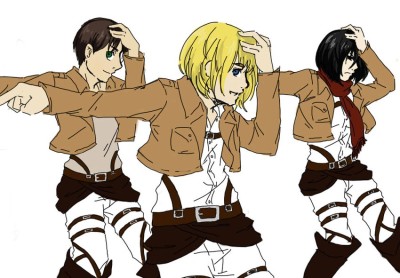
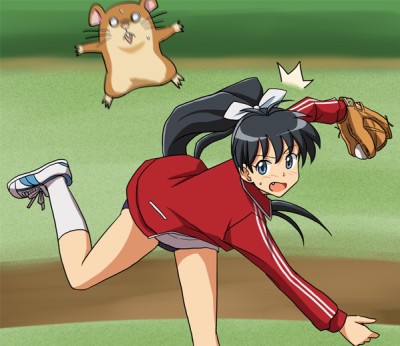
Sorry Sixten.
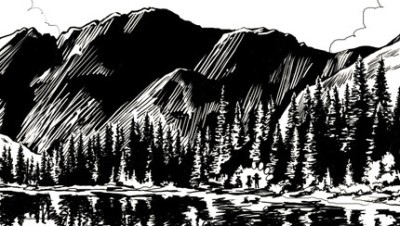
If Champagne is just the French word for sparkling wine, then maybe you have a point.
I think it doesn’t really matter what is called what as long as it’s consistent and meaningful. What is manga? Is it so hard to see that it could mean both “comics from Japan” as well as “comics drawn in style commonly found in Japanese comics”? Could it be defined as something else, too? I guess so. Why get bent over by the definition? 漫画 in Japan get called “comics” all the time, so are they no longer manga? I don’t see Adam Warren going nuts just because he draws his comics a certain way sometimes. I mean, seriously, unless you are a marketer why does anyone even bother? Bored nerd thing to do, I guess?
To cut to the chase, the ultimate problem (or the horse I have in this race) is one of marketing. Because I buy stuff like this, and marketing directly interacts with my consumption. Lately it’s also because I increasingly have to swim through PR junk from publishing companies (and in some ways thankful that Tokyopop is no longer doing this nonsense). It’s okay to call your artwork manga or manga-styled or whatever, as long as people understand what you are trying to say. But it’s perfectly okay if you don’t, and just say it’s comics from some dude, because that’s what it is (unless this is untrue, I don’t know, maybe it’s not comics or not from some dude).
Do you ever recognize how the same words can mean different things in different languages, let alone different contexts?
It seems that by calling any comics “manga” you are indeed applying what certain French people do with their alcohol. So, why do you do it? Why commit this internal inconsistency in your argument? Why do the same things you implied as “not a good thing”? What is your horse in this race? Wouldn’t it be more accurate to say ZUN is one of your influences? Tezuka maybe lol? If “anime” or “manga” is your influence, are you actually serious enough about your influences to at least identify the people and the distinctive contributions they bring to the “genre”? To cut through the skin-deep level of analysis and marketing bullcrap that makes up the bulk of the things we see following this scene?
Because the Japanese government certainly has at least one horse in this race. It uses MANGA in all caps for a reason, when you go look at the page linked there, which is AFAIK an affiliate of the Ministry of Foreign Affairs. Yay politics! At least I know when the French government wants to protect the term, they are just interested to protect a brand and their local businesses. They care about $. We understand this clearly. Japan OTOH is up to their usual soft power nonsense, which, in some ways, is much worse. It’s straight-up government propaganda, one that I hope everyone realizes? (And in this case it’s okay to do so–it’s just a pretty sad thing to do so without knowing it. Because nobody really cares that much about what manga is defined as, unless you are a marketer or is affected by it. And Japan is home to far majority of marketers of manga, it makes sense for that island country government to take care of that business.)
And let’s use Dan Kim’s book for example. I am a backer, and the book is a free download for anyone interested. Would I call it manga? No. I think it’s sufficiently format- and genre-blending that it’s just what it is. Most people would probably have their expectations betrayed if they went in only knowing it’s a manga (and not knowing about such twisted nightmares from Kim’s usual magical hole of an imagination). Sure, Kim can surely call it manga, because people would know what he is talking about in the context of Dam Kim saying his work is a manga. But would some guy reading what Omo has to say know the difference? I’m not so sure.
Call it what it is. Manga. Comics. Cartoons. Anime. Webcomic. Butts. Whatever. I guess unlike cartoons, comics today don’t carry precisely that “for kids only” connotation that our western animation still kind of has. Which is okay, as long as we recognize that and communicate clearly.
We see and know the horror of OEL marketing piggybacking on the weeaboo wave. Just talk to its perpetrators. I don’t think anyone prefers that sort of an experience over one where people are judged by the merits of their works, not some gimmick word like “manga.” [And for that matter “gamer” or “geek” or “nerd” or “otaku” or “cosplayer” or “visual novel” or insert your favorite label.] Or that by perpetrating this stylistic illusion, be able to sell a few more books or get some more eyeballs. That’s what’s unfortunate about this situation, about going to these commercial and government entities to look for meaning on what defines your work. There are no authority who is able to sort things out.
So, tl;dr:
- Please don’t go on and say your work is a manga and cite the Japanese Government >_>
- Your definition is just one definition in the sea of unsettled definitions. Or mine for that matter. What is my definition? I don’t think I even know.
- Please respect the fact that in Japan people use Japanese and at times words mean different things than our imported context and are applied differently. To an extent, this applies to Japanese companies operating in English as well.
PS. But you know, is pixiv really interested in this debate? Or do they just want a user-friendly interface that encourages more submissions=more pageviews=more users=more $=etc? You tell me.