Look and Feel

I originally had planned to revamp the blog this year with new layout and a look. It probably will still feel kind of the same, much like what the site looks like when grated through Readability, with some holes and edges thrown in. Holes and edges is what makes one human being different than another human being, right? Same with blogs.

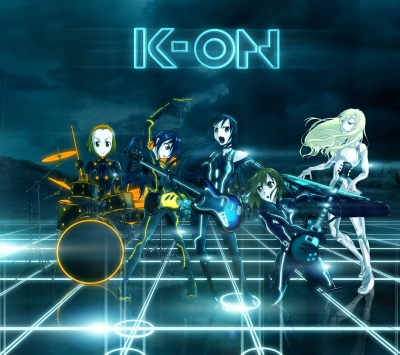
The big change is making my site’s layout, at least on the books, 100% copyright kosher. Doesn’t mean it will still contain images that are taken without permission, but that’s content, and not layout. I would be giving away a copy of Choux’s artwork to the public under CC ShareAlike (like everything else that actually is mine on my blog). You can get a preview here on the header (yeah the old header lasted less than a day, maybe just a day). I mean, after all, it’s only fair…get it hur hur. As an aside, nothing on the wordpress.com version of this blog is licensed under Creative Commons terms… heh. Not that it matters much.  Anyways, I rather like Choux’s simple design and it is moe enough for me! I just need to get her to draw it more, or recreated it or something. I have money and I am not afraid of spending it on generic looking (and I mean it in the best way possible) characters named after myself. (Now that is a business idea.)


Kouhei Hasekura and Anti-Establishment Drama

The archetypical traditional romance for scandal is the thing that makes Romeo and Juliet sensible, as star-crossed lover where a gap beyond their reach separates two true lovers. That gap could be circumstances or fate or whatever. In Fortune Arterial it’s vampirism…except it is not.

So it goes, Ms. Veep obviously feels for Hasekura, and vice versa (in this animated branch of an eroge). Erika doesn’t want to live like a traditional “vampire” or whatever that gets labeled as that in that universe. Erika has her own thought about how to live, how to live like a human, and how to live with humans. For drama, her mom makes some familial rule about it however, and there’s this conflict/pride nonsense which acts as the main point of conflict in their story, arising from the conflict of the expectations upon her as a vampire and as a human. And also there’s the whole vampiric blood and biology doing its job making Erika wanting to suck Hasekura’s blood.

To put it in other words, it is like as if Erika’s mom is trying to get her wedded off for their family’s fortunes, she resists because of pride, except she’s OTP with Hasekura. In eroge speak, you (Hasekura) are actually going after her and trying to get inside her gym shorts or whatever, and her vampiric urges that she is trying to suppress with her foremind is trying to get her p0n0’d. Oh wait, it just means she wants to suck some blood. Same difference.

I’m not sure how this is suppose to work. Or rather, I think I know how this is suppose to work and it is ringing the “this is not a feminist work!” bell in my mind. I mean think about it, Hasekura is a nice guy and all, but basically he is a tool for tradition and against independent thought, that his kindness torpedoes not just Erika’s human dignity (if she had any), but is both on the surface what he ought to be doing (encouraged) and underneath what he should be doing to unlock the CGs.

Such a pleasant story about unpleasant regression of individual’s power to choose as an underlying theme, yeah? Aren’t female vampires suppose to be exactly the opposite? Or is this just the logical offshoot of what happens when a Japanese family of vampires raises a kid like how Japanese humans do? What does that say about conservative Japanese family values? LOL.


omonomono.com Status

HO HO HO HO

Seeing how I’m doing this blog thing here, it means omonomono.com’s hosting is inaccessible in some way. Truth is, I have this $30/yr plan going (which is not a lot, but not too little) and the cheap shared hosting box omonomono.com was on had a massive hdd failure. Not sure what that means, maybe the controller card fried, whatever. I’m going to do what I reasonably could do to continue to retrieve what I may have lost data-wise, but I know for sure I have all my posts up to mid-year this year, or whenever I upgraded to WP version 3. I think. Which is sometime after June 17, 2010. I have a full backup of the blog at that time.

From then on, it is to be seen. I also have to retrieve all the other crap on my hosting beyond the blog too…

Meanwhile I should point my domain somewhere. Like here.

Blog header taken w/o permission from here.


Slice-of-Life Is a Scam, Some Bloggers Got Closer to the Truth

Have some kuuki with your kuuki-kei anime:


Personally I always thought the term slice-of-life as used by anime people is akin to lightly hitting a child or urinating in the bushes, but somehow everyone does it. Who am I to speak out against this relatively harmless offense? After all, it helps the kids to learn how to dodge, and maybe urine directly applied to the soil is a more environmentally sound (but health-poor) way to propagate the nitrogen cycle or something equally nonsensical.

But, really, these Finnish have us American dudes beat. They talked about this Slice-of-Life thing at their blogger meeting. That’s pretty spiffy. Beats seeing a bunch of people who have marketing or commercial agendas gather together. Maybe that’s why Europe is pretty cool and we uncivilized folks of the East have some ways to go.

The thing is, to me the term is always just a metaphor. You use it as a modifier, or to express a feeling or something simpler words won’t do. It is not a label, it is not a genre. When it comes to most anime that gets branded by that term we inflect a notion of nostalgia, that mono no aware-ness along with the narrative. That’s why it’s so commonly associated with iyashikei. It doesn’t have anything to do with the narrative structure necessarily, besides that it inflicts the feeling of being healed, with a slow pace that necessitates such healing.

But it is just a metaphor. You could use it as a genre tag, but it will have to be well-defined beyond its function as a metaphor. Naturally nobody’s done that (not even the virus-infested puss pool that is TVTropes). And yet of course sites like ANN and MAL, which take tags seriously, use the term “slice of life” and propagate this needless corpse of figurative speech like some kind of undead. It’s like a zombie–nobody knows how it works, yet it does. Again, I am not saying it doesn’t work: it is a black box that nobody cares to look within, and when you do you realize how stupid it is.

The second-biggest issue I have with “slice-of-life” in that sense is that it masks what lies beneath the mechanism that makes you go and call something a slice-of-life anime. Instead, people focus on the legalistic definition.  That is its sin. By doing so it makes people run in circles thinking what show is or is not a slice-of-life, but not thinking about the simple elements that evoke the feeling. Being a metaphor means it isn’t a legal, rational cause-effect concept; it’s closer to art and feeling, if you know what I mean. I mean, more people should be using and studying terms like “wabi sabi” or “mono no aware” because they are genuine JP lit/art crit terms that have a lot written for them, if they want to to do real crit. Instead we have kids jerking off to “slice of life.” It’s like reinventing the wheel wrong (and that is the biggest problem I have with the term).

At the very least, I’d rather brand stuff by terms like “iyashikei” or “kuukikei”  because at least those terms are prescriptive and not some kind of vague metaphor, if we must use some otaku terms.

Unlike a zombie, however, I can’t point a gun at a figure of speech and shoot it (again and again) dead (again and again). All I can do is rage quietly at my inability to translate all this fandom academia from Japan, who’s been at this for longer than we have and have a more mature framework.


On Con Panels, Part 1: Narratives

I’m not an expert panelist by any means, nor have I ran panels at a large anime con. But I’ve given at least one presentation in front of a big crowd (almost in  TED style come to think of it, but this was some time ago) and it seems there is a need to rehash some of this stuff in the context of an anime convention setting. I’m more comfortable saying these things from the perspective of an attendee than a presenter, but you can probably flip these things around and consider how to run a hit panel at an anime con.

First of all, a lot of what is important to lawyers, corporate sales and people who give narrative-driven presentations generally will apply to a good anime con panel. If you do this stuff for a living, you might be pretty pro already in which you can stop reading this post. All you need is to adjust the pitch to the anime con audience, know what they want from your panel and serve it up the way you think they should eat it. To that end I am not going to rehash things like, well, having a narrative. Or maybe I will?

A lot of people who go to cons are there to have a good time. They aren’t necessarily interested in learning something, but often learning something new is interesting, so they do it. I think that should be how you pitch a panel that has an educational component to it. Personally one of the worst things (that keeps on happening to me) is to attend a panel on a topic that I am very interested in, only to find that I already know everything the panel has to offer. Of course, this is much likely going to be the case since I’m the type of person who reads up on the things that I am very interested in, and most anime con panels aim for a general audience level of know-how on any particular subject matter, which is someone who doesn’t read up on the said things.

This is where having a narrative helps your panel. A narrative is like the undercurrent of your panel, the road in which there is some kind of planned, logical progression in the material that you present. A well-crafted narrative foreshadows what conclusions you make, prompts the audience to ask questions that you want them to ask, and helps them to anticipates what comes next. A good narrative modulates the flow of the panel, it builds up excitement to go with the big splashes you make in your presentation. In other words, even if your panel is an infodump, you can make it interesting for the geek smartasses who already know everything by telling them a story that is disguising the infodump.

Because anime cons (especially large ones) are geek cons, you should expect smartasses at your panels. At a trade show or an academic conference, odds are the presenters are the people working at the bleeding edge of the subject matter, and probably knows everyone else who are also at the same bleeding edge, so nobody is more of a smartass than the presenter. This is very rarely the case at an anime con.

Anyway, more importantly, a good narrative is convincing. What is worse than knowing everything about what the panelists are saying is not convinced by anything the panelists are saying. That is probably the nice way to put it, but it’s more like you know the guys on stage are just bullshitting, or worse, circle-jerking to something that’s wrong. This used to happen much more often because anime in America was relatively insular. Nowadays most people who knew anything uses the internet to check themselves, so crack theories tend to not attract traction and get panel time. These kind of issues are more distracting than even just making plain factual mistakes (although it is not as bad of one, as we will see) because it totally kills

Most importantly, a good narrative is interesting for everybody. It’s like enjoying a good storyteller’s tale about nothing interesting. So I am making a case for it. Unless you are Mandoric. Or, of course, unless you aim for something else other than a passively engaged audience.

…and there are many ways to engage your audience besides by telling them a story.

I think ultimately, con panels need to engage the audience. Having a narrative is just one of several, and finding one that suits your panel should be something you need to be thinking about fairly early on.

The roundtable panelist sort of thing generally fails at this, unless you have magnetic personalities or hot topics to keep the audience occupied. Generally they don’t work for the topics I’m interested in.

When I think about the topics that interests me, the narrative concept helps me do a few things:

Often times a topic can be very broad, even in this sub-cultural niche. By focusing a narrative you, well, focusyour panel, and it helps you stuff only what’s important in the short amount of time allowed.

A lot of the time I fall into a trap in that I think of a panel as a way to exchange information. This is true to an extent but that should only be the “headtrick.” It’s like edutainment, you want to teach, but your audience shouldn’t be thinking that they are learning consciously. You might want to discuss something with your panelists and/or with the audience, but it should only be because everyone says something that builds or plays off each other. Now of course we are adults, we don’t have to sugarcoat this stuff, but at the same time don’t make it dry either–brandy-coat it ;)

The panel builds itself via the narrative framework.  I go on and on about the N word, but how do you build a narrative anyways? That is a tough question, and it’s art for those who do it for a living. To use debating as an example, think of it as building an argument. For example, if I want to talk about moe at an anime con, it’s a wide topic with few solid footing throughout. More importantly, it’s something people debate to no end. In some ways if I think about a story I want to tell that gets my point across, I can focus my presentation towards an end, a goal, a conclusion–the points I want to tell. Because stories have beginnings and endings, usually, you have a vague roadmap to what you want to cover to hit your points. You can even make an open ending and just nudge your audience via your presentation. On the other hand, don’t just talk around the argument by presenting all the facts and what not, because nobody cares about the fact you are presenting, because they don’t know why you are doing it without you showing what is contentious.

This is where you can make some outrageous statement, as I mentioned earlier. As long as your narrative supports the weight of your ludicrous fanboying, your audience might still stick around even if you are crazy or creepy as all hell (For a hypothetical example: Shinbo is a lolicon because I’ve built a case for it in the past 45 minutes). Basically, buid a narrative to explain how you get to that point; make them understand, or better yet, sympathize with you. If your facts are right and your logical deductions are sound (bonus points for being creative) I think you might even entertain the most geekiest of geeks.

To conclude for now–go watch some TED clips. Learn something worthwhile. And see how the different presenters do their show. It’s not the only way to do panels, but it is probably a popular way to go about it if you aim to educate and to amuse.

[Part 2 may not be coming. We will see.]

PS. What I described right there is every single “The Manga Guide to” book. Minus the manga part. That is the headtrick.