Category Archives: Fate

The Anime Ghetto of America

This is not about the ghetto of an excuse for NYAF in 2010 and 2011, even if that is probably tangentially related. This is about Kuraghime and Tatami Galaxy, and why I think there is some problem with the way some people think about anime. These problems may or may not be related, they just happen to pop in my head in the past 36 hours.

1. Liking is a state of mind. I remember talking to some people about the Passion of the Christ, a controversial film about a gruesome depiction of the crucifixion of Jesus as per the Gospels. The content of the discussion doesn’t really matter, but the conclusion was that the film became more about how you (in this case, secular press versus fundie types) react to a film has just as much to do with you as it does to the film. I think that sort of mirror-transparency is critical in today’s media reviews. I think this is a big reason why it is difficult to take reviews from sites like ANN or Fandompost seriously, unless you’ve hooked on to their particular bandwagon and can appreciate how those respective reviewer-mirrors work. I think over time I have done that for Chris B., but more because he does offer a much more technical-savvy perspective on a video transfer or sound space or whatever, something that is sorely missing among reviews of anime today.

2. The problem is further exasperated, that far majority of anime out there are derivative media crossover things. This means when someone looks at Fate/Zero, for example, they aren’t thinking it is not pandering to the max, but that they are suppose to think it is pandering to the max. [I mean, how can the anime moeficiation of a popular prequel set of light novels to a popular visual novel (that was also consequently “moe-fied” via anime) be not pandering? Seems impossible.] To use an analogy, it’s like we’re in the league of extraordinary lunch box collectors, and then there’s this awesome Twilight-themed lunch box available. Some guy who doesn’t even know what Twilight is beyond what they see in the news reviews the lunch box, and says it’s kind of lame or kind of good, whatever. I’m going to be like, derp. It is missing the point. Maybe that isn’t even a good example because the hypo reviewer at least knows it is pandering, s/he is just not assigning any or assigning the correct value to that part. It’s worse when it comes to some anime: I don’t think this guy is aware of the pandering at all. Or for that matter this other guy, let alone assigning value to whatever.

While it is valuable to have the perspective of someone who would judge Fate/Zero as someone outside of Nasuverse fandom, it feels invariably that they’re doing it wrong. It’s probably because they don’t know the material is pandering. Maybe this is the majority position on a lot of anime for us gaijin, since we’re not living in a deluge of otaku-bait-marketing as our Japanese counterparts may be swimming in, but one can make a strong argument that you can’t fairly judge the work if you don’t have this context baked into your perspective. Again, that hypothetical Twilight lunch box is intended to be sold to your daughters, not hardcore lunch box collectors. By reviewing it like box collectors instead of its intended audience, it feels almost like we’re ghetto-fying the whole thing. There’s this artifice in which we’re trying to fit the anime we consume into said artifice. And for what reason?

I think this is a major issue with the ghettofication of anime. It feels helpless to have to read reviews like that. It feels probably just as helpless to review anime like that while being completely blind to that side of the equation. I say ghettofication because these mix-media slums is where the bulk of the primary late-night TV anime audience lives, and it’s kind of a silo-style, little Hooverville camps that most mainstream people don’t even want to turn an eye to, let alone adventure into and gleam the essences of what makes the inhabitants enjoy the shows they watch. Or I should say, especially on ANN, it feels like they purposely want to stay away from that sort of evaluation. I want to posit this as a problem with anime, and not so much the way people review them–after all, they can review however they want. But the fact that ANN has reviews like this it is just kind of a joke. It’s like suddenly you read a crazy rant from Steve Jobs about how he hates charities or a crazy rant from Roger Ebert about how he hates video games. I mean, LOL? (By the way both are probably untrue.) This is kind of a problem that ANN has in order to obtain any kind of credibility as an reviewing organization. (Then again, this problem can be milked for pageviews! So hey.)

2b. I have this thought about Kara no Kyoukai. That show, too, is a sort of pandering. But among these attempts (IwakamiP gets an extra nod for taking that, Madoka and Fate/Zero to somewhere slightly less ghetto. Maybe.) I’m left to scratch my head and ask if people have otherwise really tried to build a bridge between the otaku and the growing number of kids-turning-into-adults who are friendly to the cause.

3. Sating the demand of the mainstream. Continuing in good o’ OWS spirit let us talk about the 1% versus 99%, even if it comes out to be a false dichotomy of sorts. It also pings one of my pet peeve about people who says “anime is a privilege not a right.” I think that saying is largely bullshit–this is not a have-versus-have not issue. This is an artistic proliferation and industry viability issue. I might like my moe anime as much as anyone, and I do a healthy amount of importing (if such a thing can ever be healthy). But that kind “hey I paid for it so” of thinking causes two major problems. First, it drives the have-nots to what all the have-nots do in the 21st century: media piracy. There are some good studies on this topic, and it really comes to artificial barriers to entry to extract cost based on some perception of value that does not optimize supply and demand. In other words, things are unnecessarily expensive and inaccessible due to a variety of reasons (some are forgivable but others are just petty) and not only the content creators and middlemen make less money than they could have, it encourages people to pirate things. It’s a lose-lose scenario. Second, it unnecessarily ghetto-fies the industry. Talent drain and race to the bottom in production cost? Because it keeps on pandering to those who would pay the biggest bucks, because the work, the condition, and the products loses mainstream relevance. I mean how many people entered the anime industry because they saw something awesome when they were little? Tons. I also believe this is a root cause of Japan’s fandom-industry vacuum now filled by doujin production. Is Ghibli all we need? I think that is clearly a “no.” I am not saying no to moe; I’m saying yes to everything. There will always going to be trashy moe crap to consume. We can count on the least risky thing to continue to exist, but that cannot be the dominant thing out there. And in order to do that, it means we have to make anime affordable and accessible. It’s the best thing for both fans and anime industry. It’s also good for society in general.

4. But of course it’s easier said than done. I think the biggest hurdle is that the financing model for anime in Japan just doesn’t lend itself to that sort of business models. The problem comes down to that mainstream production is expensive and they have a much smaller safety net when one flops (and they do all the time). Or not even that; just taking risks to make something of it is, well, risky and potentially expensive. You can just look at Anime-no-chikara and noitaminA for examples. What goes around does come around: if nobody buys Kuragehime, nobody is going to license shows like it. What I propose is not that the problem is nobody buys Kuragehime, but the problem is why should the proliferation of works like Kuragehime depend on people buying it on home video? Shouldn’t our energies be focused on solving the root issue and not run up the same pile of dead horse corpses?

People don’t buy Star Trek (TOS) (mainly because it is really, really expensive), but people loved the show and it went on to become the thing we know today. It’s very profitable. It transformed science and technology in America and abroad by inspiring a generation or two of scientists and engineers, and generally contributed so much good to the world. Not to mention its contribution to science fiction media, TV and film. It may sound mad-old Tomino-esqe but can’t we have that as a goal? It sounds like this has to be a part of whatever solution that flushes out the dirt, the good stuff, from the ghettos and release it to the masses. If there’s all this spite and bad blood between 99% and the 1% we want to be, the going would be tough on the road to reconcile the 1% of anime fans being catered to and the 99% of fans who don’t even want anything to do with that 1%.

[BONUS ROUND: 5. This is why I find Colony Drop problematic–they seek to reinforce this ghettoficiation; I should say, that is the schtik that they make a clapping noise upon, that cardboard wall of makeshift tents in which we live in. I’m just hoping that is offset by CD pointing out such a ghetto actually exists. They do not do this explicitly, but maybe they should.]


Thinking about Fanservice, Considering “Infodump”

Just tying some thought down to a peg somewhere, so bear with me.

Elsewhere, I mentioned that the oft-complained about treatment of Fate/Zero’s verbose scenes describing the nitpicking details the…fourth? Holy Grail War is fanservice. I think once I mentioned it on this very blog, if not directly then indirectly. This is, in my opinion, is another way to approach the bigger issue of the role of fanservice as illustrated on the Cart Driver.

I think fanservice (sexual sort) is no different than any other kind of prurient material. It’s seen as the kind of pejorative you use to describe pornography–there is a single-minded purpose, or maybe a sort-of-broad, but singular, general purpose in which the media operates within. However I don’t think that describes accurately of how fanservice is in anime, or just how popular media has transformed over the past years. Can porn be entertaining? I’m sure. Can it be entertaining as what we categorize as non-porn? I’m pretty sure of that too; tho that is just a guess as it is thoroughly a category of media I am not versed in.

To go back to anime, the oft-maligned panty shot, for example, is classic example of fanservice, but it often has a role in a work. I think one of the best example of this is in Kara no Kyoukai #1–it is among Nasu’s earliest works, and it is kind of, shall we say, dreary. Something like a panty shot actually helps to punctuate a generally very serious film with something that will trigger a predictable response from its predominantly otaku audience. It serves like a pick-me-up in the middle of that one-hour film.

I mean just imagine if Fate/Zero episode 1 had a cute (not exploitative) fanservice scene in the middle of the episode. I think it might still turn off a group of viewer not that interested in the material, but it would serve well for pacing’s sake for viewers not invested in Nasuverse, but is interested in otaku media. I’ll come back to this example later.

The bigger point I’m trying to make, and I think Cart Driver totally failed at discussing, is that fanservice in anime often do serve a purpose–most sort of pandering in anime these days do. The important thing is to understand the context of the reasons behind why fanservice type X and for audience group Y because of…why? I think that should be the focus of the discussion.

It kind of addresses my main pet peeve when it comes to discussion about these sort of complaints. A lot of people dismiss some anime titles and write them off for reasons they think are objective, but in reality it is just a fancy way to say “title Z does not pander to my interests.” I think in the post-database-animal days of anime it is a lot more honest and simple to say that, for example, “battle manga” style characterization and plot progression is, just like any table, column or cell of a database, is something exchangeable, interchangeable, and is a thing that some people will like and others dislike or don’t care about. Instead, otaku interests focus on execution of applying these elements to the work. (I think this is a big reason behind the rise of the sakuga otaku overseas as people slowly catch on.) Everything has a plot, most anime have characters, and the way certain things are written or developed usually is out of some purposed database concept, a set of checkboxes, if you will, in which the way things are executed make the most sense if you first identified what those checkboxes are. That is, unless you want to look for something at a place where that thing isn’t intended to be there, and likely isn’t going to be there. (And that is not to say you won’t ever find it or even that is a pointless thing to do, but it seems like an exercise of fitting a square peg into a round hole.)

In other words, using an expanded definition of what “fanservice” refers to, when a viewer encounters a block of content on the show that panders to a specific group that viewer isn’t a part of (or perhaps more aptly, a group that the viewer doesn’t even wants to be associated with at all, or is entirely unaware that the content segment is tailored for that group), that becomes a detriment to the viewing experience. So when someone like that watches Fate/Zero ep1, they may understand that ultimately it is some kind of characterization and setting the ground work, but it would appear very dry to them. It is a little bit better than the hypo where a prude sits through a (sexual) fanservice scene, because in that case often you get the reverse impact where the scene signals to viewer that this is not the show s/he is looking for. In Fate/Zero’s case, the viewer would just miss out on the entertainment portion of Fate/Zero episode 1 and is thus left with just the dry crumbs of circular-walk-talk. If the purpose of the double-length episode 1 of F/Z is to educate and entertain, people who aren’t interested in the more otaku-ish aspect of Nasuverse or just aren’t aware of them, will miss out on the entertain part. [Maybe they should’ve played karuta!]

Well, at least I can see why ufotable went that way. Urobuchi does do tl;dr from time to time (remember the entropy lecture in Madoka?), and given the compressed nature of episode 1 (after all, it’s stuff they are required to go through to get to the money shots, might as well get it over with one shot), inserting all these referential entertainment and interests into the exposition may be the most logical way to go about it. Unfortunately that just isn’t what a western/Hollywood-bred audience is used to. The alternative, to use a personal anecdote, is like when I tried to watch Game of Thrones TV, it takes a few episodes to just to get all the names straight. And by a few episodes that is 2 or 3 hours, versus 3 or 4 22-minute segments (ie., well under 2 hours) that is Fate Zero eps 1-3. And just to finish the anecdote, I didn’t like the fanservice (both the sexual kind and the pandering-to-people-who-appreciates-the-details-from-the-book kind) so I dropped the show. But it wasn’t for the lack of or poor execution on HBO’s part.

This overall notion of fanservice is, I guess, the reason why I said Fate/Zero panders to otaku. Even if on the merit of the thing, there’s a lot to like just from a general nerd-geek sense. You’ve got fancy legendary historic figures that a western audience would be familiar with (the historical fiction aspect) doing some visually excellent stuff, with a fairly dynamic plot that is expansive and multidimensional, with a well-developed cast of characters (as far as in terms of the novels) that are largely interesting.

In a sense, what I’m saying is, in full circle, in agreement with notions that Fate/Zero clumsily executed certain aspects in the adaptation. But the reasons behind them are not what I think some claim they are. I mean as someone who is invested in Nasuverse I think it’s hard to argue that episode 1 wasn’t at least intriguing, even if it is a lot of TL;DR. Or, as others have put it, despite that it is TL;DR.


The King of Conquerors

One of the neat thing about Fate universe is its historical fiction aspect. Unfortunately, like most Japanese take on actual western things, it doesn’t quite match with what I have in mind when I think about Alexander the Great. In fact when the first promo for Fate/Zero came out, it left me sort of worried. The Iskander/Waver story is one of the best parts of Zero, after all, and I was hoping, if anything, that the adaptation would retain the Waver/Rider story’s charisma.

I mean, in my mind, Alexander the Great is this guy who died in his prime. Granted people back then don’t live very long on average, but he died when he was just 33 years old. (And from what I can tell, while that is higher than the average life expectancy for the period/location, once we take away the impact of child mortality anyone older than 15 should live to on average over 40 years.) Maybe that qualified you as “old” by anime standards, but it doesn’t mesh with the popular depiction of Alexander the Great in the west. I mean he’s middle-eastern, sure, but more to the tones of a pretty Greek dude and less of a crafty mountain bandit image. It would be weird once he starts playing video games!

Second, Alexander the Great is a great general. I think one of the most fabled thing about him is reportedly not losing a single battle. It also makes him one of probably the best military general ever lived on earth, given his exploits. At least in a top-5 list for sure. I’m not sure if the anime actually got this right when describing his background.

Third, and perhaps the most important one, is that it is with his sheer charisma that Alexander the Great was able to unite the large territories he conquered. The anime seems to build the Iskander Rider character out of this notion, and his semi-foolish claims of taking over the world (and had the means to at least made the joke seemingly less funny). That part is fine by me, at least in the sense that Fate Zero can also be a primer to history and bringing to life a historical marvel. At least, as long as you don’t think Alexander the Great is actually like this, or King Arthur is actually a person. I mean Arthur could be a girl for all we know.

There is a lot to be said about Waver too. I think in the book Waver was more appealing as someone who had ideals about meritocracy but failed to look within and see the flaws that tarnished his capabilities. Besides instilling a spine into the lad, Iskander is a mentor, a friend, and someone who is simply just better than Waver and inspires Waver to become a better person despite the Grail War circumstances making things difficult. The anime captures the interpersonal dynamics pretty well, but I think of Waver more a tsundere than the semi-dere little critter that he seems to be in the anime. By painting Waver as this green-behind-the-ears grasshopper slash bumbling academic, the overall dynamics will work. I just think he is probably a little too soft-boiled. I mean even Azaka Kokutou would’ve schooled the boy, and I always thought just by being a Mage at the Tower at one point, Waver was already better than that. Well, that’s just me.

===

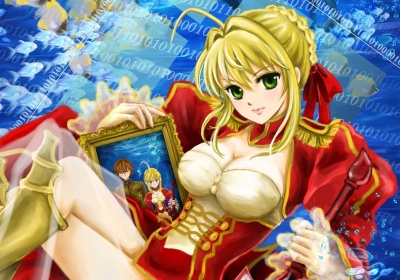
I just want to note that I was in the last round of close beta for Sword Girls, which is this online collectable card game featuring pixiv-style moe girl visuals. It is a pretty fun game as far as a free-to-play online doohicky goes. The CCG mechanics lend themselves more to that style of play than actually decking it out and counting cards and what not like M:tG or whatever. Sure, you can do that in the game too, but it all feels too fancy and more about getting redraws to fish for combo cards. I guess what I’m trying to say is that some moe card games are solidly built on proven mechanics, others are more interesting and fancy than proven. Still I can see myself playing it from time to time. Top image is from said game.


The Adaptation Consumption Mentality

As I anticipate Fate Zero the anime on a week to week basis, I’m forced to recognize that this show is actually made more for fans and less for people who may not have had that baptism of Nasu-ism. But more importantly, let’s take Fate Zero’s meticulous adaptation of the first battle royale for example.

One of the initial reactionary threads from Fate Zero’s first episode is how there’s all these talking heads and talking points. We see a lot of little things that are nods to fans of Nasuverse, but it’s mostly a premeditative piece, giving us the ground work.

Maiya wasn’t introduced until episode 3. Saber and Lancer didn’t cross blades until episode 4. That’s close to how the novel panned out pacing-wise. The bulk of the first novel (out of four) sets the up the events from the first episode, cumulating to the scene where the masters summon their servants and ending with the first real battle. That probably means we will not see it wrap up until episode 6, or about one quarter of the 25(?)-episode run. That also means this battle that started at the end of episode 3 would not conclude until probably the end of episode 5 at the earliest, more likely until episode 6. If I recall correctly there’s a nice built-in gap that transitions between the end of the fight and the start of the next scene. It is also probably the first time I’ve watched an anime with a 3 or 4-ep fight scene that is not at the climax, in years.

The interesting thing is, I’ve already read the fan translations; I know what will happen in Fate Zero. There are little reasons to doubt that ufotable’s adaptation will stray much, if at all, from Urobuchi’s novels. If Kara no Kyoukai is any indication, they won’t stray unless they absolutely have to out of constraints of the medium. As such, there are no mystery for me left to discover besides the adaptation itself; the craft of the animation, breathing in an essence of life into what used to just be words. And as an aside, yea, those things are enjoyable thanks to ufotable’s Kyoani-esqe take on the source material, largely with a straight face. But that isn’t what is driving my desire to follow the show religiously; it merely keeps the flame going in the face of seeing all those talking heads, even in the heat of the battle (complete with DBZ-esqe narration).

And still, why do I anticipate Fate Zero so? Why do I pine from each subsequent episode when I already know what will happen next? More curiously, is this the case for someone who hasn’t read the novels? What would drive them to follow the story with eager anticipation? Unknowingly, I was building a set of expectations and a framework in order to view and to appreciate Fate Zero, in a diverging way than someone (that I imagine) who may like Fate/Nasuverse, but who did not read Fate Zero before. And it’s probably safe to say that is yet different than the reactions of people who don’t know anything about Nasuverse or don’t care much about it.

I suppose after putting it to words, none of these realizations are surprising. In a way I have already externalized these things–adaptations can cater to new folks and old friends alike, but they are distinct groups of viewers with some of the same and some diverging needs in order to be immersed and be able to contextualize with the work. I just think when it comes to Fate Zero, there is a pretty gaping hole between these two groups. Or just me and everyone else. Or at least something in between the two extremes.

I think there must be works in which the very opposite happens; that when adopted, there is just one primary framework in which we engage the work, fans or not. And given how so many anime are adaptations, it’s probably common. To go another step, I suspect this is a very big deal when it comes to stuff like Lord of the Rings, Harry Potter, or Game of Thrones. In the Game of Thrones case, I’ve already seen exactly that dynamics come into play; and the same kind of pitfalls anime adaptations fall into, you can see it in those too–namely, when things tries to cater too much at the expense of the straight-face take.

Still, none of that explains the circle-walk between Kotomine Sr. and Tohsaka Sr. That is totally not from anything.


Anime That Saves Anime

I think it’s a small exaggeration to say that this season is the season where anime saves anime. By that I mean while as an avid viewer like myself might find, at any given season, a good dose of TV anime that are worth the time watching, it’s rarely the case that I can pick up a show and recommend to the average anime-aware nerd who may even be keen on a few titles of their own. When such a show appears, those rare viewer types perk up to listen for it, and goes to fetch it.

I suppose part of this thinking came about because I have friends who may have liked certain thing (like Final Fantasy 7, for example) but would have otherwise find the offering slim pickings out of what anime output OTA to the tube in the last 10 years. It’s without any irony that I can offer Fate Zero or Guilty Crown to these guys. Okay, maybe with a sliver of irony.

The more interesting thing is shows like Hourou Musuko and Madoka Magica were pretty good, to pick something else in 2011, but they are much harder to access by those guys. It’s like the average video game/anime overlapping demographic of over the age of 28 or something tend not to lean in that direction. I am even wondering if Redline falls in that category (or not). But then again, 28 is pretty old for this stuff. The younger crowd would have had a better tolerance for a much more fancier chuunibyou material that didn’t have that backbone Steins;Gate demonstrated, or that sense of lighthearted adventure you can find in anime back in the 90s.

Is this why Kenichi is getting an OAV?

There’s just something, an intangible way that it makes you feel, that shows like Guilty Crown gives off. It’s like sinking your teeth into FF7 and spending your first few hours into that landmark game.

The thing is, despite the mind-blowing fabulousness that is Mawaru Penguindrum, I’m not so sure that even fits. Cute and funny penguins do go a long way to break down that barrier. It’s as if the show just wasn’t written for that oversea audience, though.

Which is to say, while I am much less critical of the new Last Exile than some, that intangible feel is definitely running thin in the pilot episode. Perhaps it’s just a case of nostalgia being less accurate of what it was, but it would be the first time I find Maaya Sakamoto not the most welcomed vocal in a show. I mean, great song, but it just doesn’t fit the show. That’s not to mention the way how the animation turned out.

TL;DR: Having boobs is great, but it’s how you use it that makes all the differences.