Category Archives: Seiyuu, Idol, Pop

True Tears x Hanasaku Iroha x Tari Tari Festival

It came and went like a brisk sunset at Tokyo Bay.

The PA Works festival, for the uninitiated, is a typical anime event where people involved with the show do a little show and tell, except in this case it’s focused on the music. It’s particularly appropriate since Tari Tari is a story heavily reliant on music.

The show was at Maihama, the JR terminal to Tokyo Disneyland. On a Saturday it was full of normal tourists, but now there’s your usual otaku crowd.

Maihama Ampitheater

I had a great time just chilling outside. Originally I thought goods sales ended at 3pm and I didn’t make it to the venue until twenty past four, so instead I waited outside for my Japan travel buddy who was coming straight from Narita Terminal 2. The weather was too nice to be stuck indoor waiting with a bunch of hot-blooded anime otaku.

I scored a pretty cool wallscroll that they were selling for this specific occasion. It turns out all the goods would go on sale in Akiba until May anyways, so it’s no big deal that I didn’t really spent any time shopping then, and they were still selling it at the venue after the goods sale time.

The event was pretty much an Anisama-class thing for me, except I actually care about all the music since I pretty much adored all three shows to some varying degree. Seeing Riya doing True Tears stuff was definitely one of the biggest highlight, along with seeing Sphere finally in the flesh and hearing the Tari Tari seiyuu doing vocal harmonies.

I don’t really have a tracklist, but basically all the bands play the OP/ED pieces. Nano.ripe in particular played a couple c/w tracks I believe, or maybe they were for other mix-media releases that I don’t recall or know about. I can say for sure my impression for Sphere and Aira Yuuki changed because of this event.

There were a lot of cm segments because of all the bands coming in and out of the stage. I think Nano.ripe set up three times including the encore, so that’s kind of lol-tastic. The bassist for Clammbon is actually an otaku of sorts (and was asked to pick from True Tears after he siad he liked it the most) and it’s always fun to hear the Sphere girls do their usual routines. What’s a bonus is to see Asami Seto goofing up because she was too nervous. That girl is something special. Saori Hayami felt like a much more capable Noto except she trades some presence for singing and dancing abilities.

Aki Toyosaki wore a tall hat. I was exploding.

What is unexpected were the True Tours tie-in as Riya sang a couple of the themes, and Minori Chihaya’s string backup band played a 4-piece medley of the themes from the three anime series. There were flying streamers, camera poses, and a trio between nano.Ripe, Riya and Airi. It’s kind of cool, I guess.

Other notes:

  • Ayahi Takagaki had 4 costume changes. She sang the Aburamushi song.
  • There is one cool t-shirt that the Tari Tari seiyuu all wore.
  • Despite that the concert website advertised only 4 of the 5 Tari Tari seiyuu, Air Daichi not only performed, also existed in the flesh to do Shiokaze no Harmony, which is pretty epic.
  • Ah, yes, the high school choir. The interesting thing is that because this concert is in mid April, the choir is now half made up of different people as seniors from last year’s choir all graduated in March.
  • My seat was on the right side of the stage at the back of the front section (row 9). It’s actually the handicap seats, which is kind of a rip given how much we paid for the seats, but it’s also convenient since it gave us extra space.

It’s a cool show, and I’m glad I was able to see it in person, even if it is something that’ll probably end up on Blu-ray. The night ended with hanging out with a bunch of locals at A-Button. We all recommend the curry. We also hung out way too long.

This blog post is brought to you by jetlag and local draft beers.
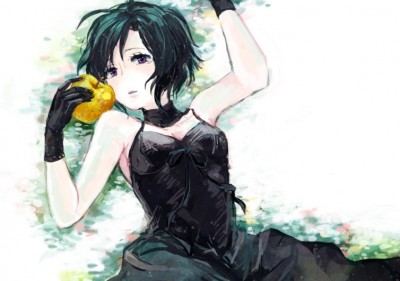

Seiyuu Hats

Just to clarify, not the TF2 virtual currency kind of hats, but ones people rock because, well, it’s useful while stylish.

It must be my sleep-deprived brain, ravaged by Simcity, that I felt a need to write about hats. I guess in a sense the power of hats is how it covers your head, both to protect it from the elements but also to hide what’s beneath. Still, regardless why these people wear them, I find them kind of fascinating, especially when it’s a woman rocking one.

It’s been a while since I wrote one of these.

Continue reading


Seiyuu Idol Debut Season

Congrats 2 Hiromi Hirata!

It might or might not be duck season or rabbit season, but it’s definitely seiyuu idol album debut season. Beware of the ref links, sorted by release date.

Ayahi Takagaki – Relation, Apr. 17.

Shizuka Itou – TBD, Apri. 17.

Ayana Taketatsu - Apple Symphony, Apr. 10.

Mai Aizawa – moi, Mar. 27.

Kana Hanazawa – Claire, Feb. 20.

Mikako Komatsu - THEE FUTURES, Feb. 13.

u’s – Love Live Best Album – Jan. 9.

StylipS – Step One – Jan. 9.

On the horizon is Yoko Hikasa’s “compilation album,” too… And YuiKaori is probably due in 2013. I’m probably missing someone. I have to give it to Yoko Hikasa’s Pony Canyon website for dishing it up, that’s exactly how you should approach selling her stuff.

Don’t even ask if they are any good. I guess we can actually admit that Hanazawa’s is something you can listen to, but nothing here is going to change the world or anything.

This is, of course, on top of all the other crap coming out. Looks like it’s going to be pretty busy up till April.


Good Job Robbing the Cradle, Guys

It's manga niku

I laughed when Hashihime titled it “youth movement.” I guess it’s true when most of GJ-bu’s cast members are under 17 years old. But it’s not even the first or the lowest-on-average otaku anime in terms of seiyuu age. There’s this (now-licensed) anime called Sasami: Magical Girls Club where, at the time, all the main voice acting girls were 13 years old. I assume it’s licensed because it is a tangential hinge on the Tenchi Muyo franchise, and it’s probably not a horrible show, I don’t know.

I want to raise this point because what I think is a good job isn’t that GJ-bu is full of young’uns. I think what is good is the profession of the seiyuu idol has seen yet another subtle transformation.

In Magical Girls Club, the series is more like a launch vehicle for a potential teenage idol unit, working with girls already on an idol entertainer track. You can check ANN for details. On the other hand, the girls in GJ-bu are on the seiyuu track, groomed to probably become actual seiyuu-idols.

Seiyuu idols are not a new thing. They’ve been around for maybe a couple decades now, as a genuine career path, at least enough of a path to make a name for yourself; the Shiinas, Hayashibaras of the world. But one Nana Mizuki doesn’t make an industry; she’s just an icon of a larger underpinning of systems and businesses and more importantly, entertainers of varying degrees of success. And honestly, Nana is more about anison than idol. Idol, in my mind, is like Yukarin Tamura and Yui Horie, who are also groomed in the same steps but are nurtured not with the money of a hit success, but a cult-like following. Their businesses are not so different, but I think there’s a reason why I don’t think Nana’s generation will raise another Tokyo-dome caliber seiyuu.

Well, people might take issue with me saying Nana Mizuki is mainstream, and I understand where they’re coming from; it’s like saying AKB0048 is not mainstream. But I think that is making “not mainstream” a meaningless indicator if I have to go the range from, say, Ibuki Kido, to a girl a month older, Juri Takahashi (of AKB48 team A). One is clearly, actually, mainstream enough to be called that. Nana is mainstream enough for Kohaku, so that has to count for something. But if Nana is not mainstream, to satisfy the semantic arguer, then everyone else is waaaaay not-mainstream. Super un-mainstream. Super-super-stream not-mainstream.

But it’s nice to see a deeper integration and talent cultivation for the likes of Kido and Miyamoto. Maybe the debutante Chika Arakawa will build on her possible success here. I mean, think about it. It isn’t that kids did anime voices; some of my today’s favorites include the ever-present Miyuki Sawashiro who started at 13 years old and ex-child performer Maaya Sakamoto who started at 15. It’s distinctly different than, say, Yuuki Aoi’s Murasaki at 15, because that was the case where they hired a kid to play a kid, not so much because they were grooming her career to be whatever the petit-pas that Aoi is trying to do today.

Actually, what is Yuuki Aoi trying to do anyway? I think this is kind of exactly not the thing, say, Yui Ogura is doing. That’s what I’m talking about. But that might be jumping the gun. Maybe we just like kids in our anime playing our animated kids. Is that what the Forever-17 club is trying to do?


Asumi-san@Ganbare

This post is actually not about the radio show with almost the same name, Asumi-san@ganbaranai, which is the companion radio show to Sasami-san@ganbaranai. This is more about, well, Kana Asumi and my musing on why she’s in so many shows I watch this season, and in general for the past few years.

In a nutshell, I think she embodies the basic idea of seiyuu’s rise to popularity: just voice as many main characters as possible. When I go see seiyuu (and for that matter, also English-language VAs) at cons, their popularity often correlates with simply how many major roles they’ve taken on. Sure, things are not so simple once you start digging, but things do very generally boil down to simply this fact. It’s also not unusual to hear a lot of newer VAs reflect on their future in such a way when they part ways at a con. I think Kitamura Eri especially impressed me in this way when I saw her back at AX–she was just starting to get some bigger opportunities at the time. (You can kind of see why she would say this.) If you want a lot of fans flock to you at a con, just work on more shows and more popular shows. It’s especially true overseas–since it’s usually just the anime that get exported, not the sei-wota culture, the web/radio shows or stage events.

asumiss

What’s special about Asumin? Wikipedia can be helpful here. Well, it’s not so special to like apple pies or have an older sister, but that’s the thing they say. It might help to know her nicknames. It seems that after graduating from some Tokyo-area college, she eventually signed up with 81produce, after previously dabbling in various things like singing or what have you. And if Wiki can be trusted, you can infer, well, good luck finding a job in Tokyo with a nursery school teaching license after graduation. Why not be a seiyuu?

Since her bursting on to the scene around 2007-8, she’s doing more and more voices, and many of them lead roles. In my mind there’s a particular brand of nasal that Asumin currently owns in her space. By her current level of success I can assume that most of us find that brand of nasal kind of cute. Moe, if you will. But what is truly remarkable about that sound is that she can actually subtract it and turn it on and off, like a gradient. Being versatile in that gives a voice actor the flexibility not only to do a memorable role, but also blend in and snatch up multiple minor roles within a single show (read: easier to land more jobs).

It’s probably safe to say that Asumi has been voicing certain types of roles–moe protagonists, namely. She’s done little sisters, raging emo teen, magical critter, quiet shy girl, quieter shy girl, overenergetic teen plot generators, and of course, the childhood friend. There’s also more of a branching out as of late: the womanly, little sister/obasan, little sister/grump, maid grump, and genderless shounen battle manga participant. I don’t know where she will go but there sure are a lot of Asumiss characters out there already. I guess the main thing that’s left for her is voicing some Jump or Jump-like protagonist (say, like Kyari in Magi).

I think the other notable thing about Asumi is how she had to take a break from doing all this stuff a couple years ago, in relationship with her old idol unit from 81produce. When she announced the break in 2011, it end of the road for LISP, which also dissolved in the same year. In 2011 she was doing a lot of roles already, though, so there’s probably some kind of back story there.

Anyways, I didn’t intend to do an Asumi overview but it kind of turned into one. I hope you’re enjoying her various roles this season like I am!