Anime Weekend Atlanta 2014: Wrap

It was my first AWA, and I had a good time at Atlanta. Part of it has to do with the ability to hit up tourist attractions like the World of Coca-Cola, but also I just did fun stuff. Like not sit in line all day, or eat good food (and paid a hefty price for that). I’m not sure how much of these fun-generating activities had to do with the con, and more so because it’s the South, and they do things differently.

That said, the con itself is run fairly okay for the parts of that in which I interacted with. I spent a good amount of the time inside the con hotel, which is where I stayed. It’s got that open well-like architecture where a nice pit-area-like setup at the ground floor is surrounded by the rest of the hotel, going up 14-or-so floors. It does mean things get really loud if you open your hotel room door. I mention this because that was a thing sort of in the way of us watching lives inside our hotel room when the door is propped open slightly.

Arigato, roboto-san

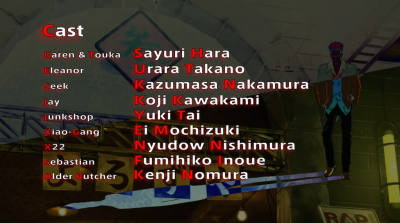
I watched the first two episodes of Karen Senki. I also got to talk to Ouji Hiroi a bit. I’ll talk about that later. But it’s nice to see someone like him at that con, adds a little bit of cred. He was there on Crunchyroll’s behest I guess, so he didn’t really show up on the schedule or the con promo, which is weird and odd and I think CR needs to not drop the ball there for whatever the reason. (I’ve done this too many times to assume it is just their fault, but it is their responsibility ultimately.) Anyway, they screened the first two episodes there (about 20 minutes worth of anime) and, well, it’s interesting to say the least. The most interesting thing was that Hara Sayuri is character voice of the titular character (and her sister).

The rest of the time we were there trying to accomplish our primary mission, which is to stalk a certain somebody whose name I’m not suppose to divulge. It was not a guarantee thing, so we were okay that we failed the primary mission because the secondary objectives were complete and fun in themselves. The World of Coca-Cola, for example, feels like a giant brainwashing chamber of commercialism and sweet syrup. It was quite the experience so I recommend it, but not in a good way, other than the soda sampling thing they’ve got going where you can drink like 80+ different Coke products, including 30+ variety from overseas.

The food and BBQ were tops. Steak was good. Heirloom was best of fusion American cuisine could be, if you think about it. We ate two meals at Local Three which is a ridiculous burn rate for the wallet, and I didn’t even have any Kentucky bourbon despite its huge list of such things or similar. It also served Suntory Hibiki. And how can we resist? It is the siren’s call for old timer Ps.

Speaking of secondary objectives, MIQ was there and she rocked. I think when we dig back to golden age anison singers (which is something I never do on this blog) she has to be one of the top ones right alongside Aniki and the likes of Horie Mitsuko or whoever else I don’t know. Yeah, Men of Destiny and all that. Essentially the con concerts, other than the forever young Shonen Knife, was a bit of a cover-fest. VLOMIQ, which are 11 of MIQ’s students from her school, also performed at AWA and they are obviously 100% cover. I think along with Ardith’s Konjos (her amateur cover group) and the various VocaloidPs spinning music they didn’t write at the rave, it’s a lot of covers all weekend long. And we didn’t mind as eventers. What was the problem was that none of us were really into old school music. Like, J9? Srsly. Loverin Tamburin was a nice rocking addon to the con though, and it’s the first time I’ve seen someone do double stage outfit disrobing.

Ardith is perhaps the most famous old school EN language fan, who’s been in Japan for a long time trying to strike it. She coauthored a bunch of stuff. But other than the whole ethnography angle it’s kind of interesting to see what sort of stuff happened as far as her participation in the other aspects of fandom. Along those lines, it’s always fun to see also the Nihongo de OK routine + Mirai de Neiro at the East Coast. Go Miku go.

I always said that Animazement is a laid-back experience. AWA is also similarly laid back. So I can see why this con is pretty enjoyable, down to the frenetic Thursday night flea market thing they’ve got going. But without a strong guest list like Animazement, AWA can be a bit of an investment, which explains why I’ve only made the journey this year.

Some idols

And yeah, there was a Love Live panel and an IM@S panel. I only went to the LL panel (in WUG gear) and IM@S panel ran into VLOMIQ so I couldn’t go. I spotted some IM@S cosplays in Forever Star ☆☆☆ outfits, which tickled my fancy. One twitter folk also cosplayed as Star Piece Memories Azusa. That is admittedly like, 5 more IM@S cospalyers more than I had expected. On Sunday, there was also a MayuC cosplayer. Needless to say I am very stoked, even if MayuC is not my oshi! This is an encouraging development!

No loot shot, because I didn’t really buy anything worth noting–MIQ and VLOMIQ were selling things so I picked up a couple things as a memento, but that was it. And a couple silly all-ages doujinshi from the Thursday night flea market.


Japan Music Sales Blargh

Lantis Fesst (9/23/2014)

This is the executive summary (by the way of Babymetal)

http://www.engadget.com/2014/09/22/cd-dominates-japan-music-sales/

This is the original article, via the NYT.

http://www.nytimes.com/2014/09/17/business/media/cd-loving-japan-resists-move-to-digital-music-.html?_r=0

Here’s an example of doing it too much that it’s making inaccurate statements. (Also worth reading is that last link to an earlier Verge article which did do some justice to this topic–I guess the guy who wrote it up just didn’t get what the first author was trying to say.)

http://www.theverge.com/2014/9/17/6330039/why-are-people-still-going-crazy-for-music-cds-in-japan

Here’s a better one but still a tad off.

http://www.forbes.com/sites/hughmcintyre/2014/09/21/85-percent-of-music-sales-in-japan-are-cds/

The problem of the…problem is that nobody is really wrong-wrong. It’s  more sloppy writing, not really understanding the full picture, not really digging into the core issue. And it’s not like I’m asking for a lot, 10-20 minutes at Google can give you all that is relevant. Also in the mix I find some kind of unsettling presumptions that these tech presses have when they subsequently re-blogged the NYT article. Well, it starts with the NYT.

To sum it up, it’s basically assuming that by not adopting, or adapting fast enough, the services that in 2014 people know well of, such as Rdio or Spotify, Netflix or iTunes Music Store, that Japan is not “embracing the digital.”

That is just the first problem, by the way. Japan is one of the very first to “embrace the digital.” What happened is that because they are early adopters, Japan’s various licensing bodies went to work to protect and monetize its properties. They want a shot at it; they wouldn’t just cough it up to the apparent market winner just because. There is a reason why Sony didn’t license to iTunes until 2012 domestically–it’s because they see iTunes a competitor to their own digital businesses, much like iPods are competitors to Sony’s PMPs over the years. Is it fair to call that protectionist? Maybe. But isn’t it just normal competition, where entities that own the whole stack can leverage rights to benefit the platforms it invested in? Apple doesn’t publish any music, I mean, can you imagine what would happen if that’s the case? Japan’s strange CD-based ecosystem affords Sony (and others) to play hardball with their competitors in the licensing space, where as they couldn’t fold fast enough in other markets.

There are a bunch of other factors behind why JP publishers are reluctant to license to the likes of Spotify. One of it is partly what the NYT article touches on, is that these Japanese businesses are too slow to abandon ship and switch, as execs busily maintain the status quo. The other is the high prices at CD sales, and the great fear that it comes with as new business models subvert, especially coming from foreign companies that are used to a much lower physical price point. If you bought anything off iTunes Japan you would know. These are major incentives for Japanese rightsholders to not cooperate with foreign companies trying to enter the Japanese market. These are what I expect these articles to actually talk about.

What disturbs me is that none of the articles recognizes that they’re all expecting American (and UK for Spotify I guess) brands to march into Japan as if they own the place. OK maybe I shouldn’t expect so much in Verge’s case but I expected more from NYT and Forbes, that they’d at least respect this huge business and cultural gulf between Japan and the rest of the world, just in general, in terms of this industry. But nope, not even a word to recognize this. That’s not even starting to talk about the things they did recognize, such as music rental, or how a hard core physical purchasing culture has been fostered (and along with it a very strong used goods economy–it feels as if none of the above writers has ever sets foot inside a Book-off in Japan), doing streaming digitally ala Spotify and the like may not work at all as a core business.

[On the Book-off note, doesn’t it strike people when Japan’s #1 used media chain can establish international branches? That’s the kind of prestige reserved for very successful brands.]

And it’s not for lack of trying. On the domestic end or abroad. But all too quickly these articles seems to parrot a strange reluctance, and calling it strange, without really trying to actually explore why it is so.

But of course, it’s not such a bad thing–here’s one article that posits an interesting correlation to the strangeness: age.

The whole convo we’ve had on twitter is probably worth a read, if just to act as a sounding board for your own theories.

Between Tsutaya, Book-off, old people who buy old music everywhere, and all the other things that make Japan different, is it really a surprise that what works for Americans and Brits won’t work for Japan? And should it? It’s as preposterous as suggesting that Americans can buy more CDs if there are more idols in the USA.

Or maybe it’s not really that outrageous.

PS. Read some reports from 2012. Government output on study of music demographics, who buys what where, new media use, etc.

PPS. I’ll be hiding at AWA this weekend. Come and say hello. I’ll be wearing around a Myu happi one day and an IM@S 9th happi another day, which are probably the two most distinctive things you’ll find inside my luggage at AWA, I hope.


Daydreaming about Lantis Fest Vegas

Rather than just posture my embarrassing fantasy in the form of a guest request post on a certain forum, why not embarrass myself here instead. I have Google analytics! I know how many people read this blog. LOL.

Reon surprise guest at 9th? yeap.

Continue reading


Competence

Author trolls us with yet another dumb truism, but I will one up him. He asks, “should anime aspire to greatness and fall on its face, like Fractale, or should it aim for competent mediocrity and succeed?”

My answer is “What are you smoking? Is not Localdol great and exceeds mere mediocrity by all measures?”

This comes from a man who has finished watching Rail Wars, and kind of regret it. To that end, however, I am not alone. And I think this Brit puts it plainly. That is truly mediocre, if successfully so.

Rail Wars, more precisely, is actually aiming for mediocrity and achieving it. I finished the series not only because I am partial to seiyuu of certain types and trains, but because it is fairly well-executed fluff, bearing Vania600’s designs. If you can do that with a fanservice-oriented show, I would consider it a success, at least artistically.

But as someone who has watched Rail Wars, I can tell you that the gap between it and something like Locodol is night and day. For starters, I do not end Locodol with an excessive (albeit just a little in whole) feeling of regret in the form of “what the hell did I just waste my time doing?” I suspect Author has no idea what mediocrity really is, in the sense that I don’t know how many series he has finished is truly mediocre. And by that I don’t mean just “of only moderate quality,” I mean most shows he can afford the time are probably above average by a discernible amount, that the shows he finish are questionable in terms of their true conceits–do they even have any? Does he enjoy shows oriented to male titillation, for example? There’s an entire mountain’s worth of stuff under that category, and they vary greatly by quality.

Alternatively, we don’t have to go so far. It’s well-documented that people have different standards, even what passes for some literary parallel to the arithmetic mean. What we consider a regretful use of time will vary from person to person.


Under the Dogfluence

This girl is throwing money at us, right?

One of the PR points repeated in the Under the Dog crowdfunding campaign (disclosure: I backed it) is that these creators struggle with production committees not taking a stab at the global audience, and instead are inwardly focused on the domestic, “moe” crowd. This sounds okay to me, but it also sounds like a truism and misses the point.

I am all for addressing that risk-averseness and the tendency for these funding committees to ride that bicycle, so to speak, that there is no gain if no risk is taken. However I think poorly of the “targeting oversea audience” bit. It basically comes down to how we define anime and why we like it.

In some sense, I work on the assumption that ultimately Japanese fans like a lot of the stuff oversea fans like. There is a huge common ground. The question is more so, how do we tap the wallets of these people, who are probably not going to dole out $$$ to buy a standee, or whatever iconic act of being able to gravy-train a vertical.

In that sense, it’s putting the money before the product. A more natural perspective is how do we enable the creation of “marketed animation projects” in which delight fans per se, but are outside the influence of that creative committee? By “marketed animation projects” I mean distinctly something that’s not like the pioneering crowdfunded project, Kick-Heart.

Kick-Heart (disclaimer: I backed it) is a cool art short (15 minutes) by Masaaki Yuasa and given the amount of work that went into it, I think it’s a fair trade. In this sense we are engaging the production of animation in a pure way: backers pay and get what they paid for. We are literally buying anime. You are not even buying an ad that’s made to sell what it adopted from, let alone buying into some long-term arrangement (eg., being a P, or something about identity politics, whatever) that is more like a relationship than a simple purchase. I’m not sure anyone who isn’t into arthouse-type animations will pay into Yuasa’s kickstarter in a significant way. That’s not to mention, if you will recall, the whole significance of Kick-Heart Kickstarter about funding independence and giving animators good enough pay. It never was clear if crowdfunding can be a solution to those issues then, and even today, but it certainly doesn’t hurt to try. The problem with that is, to me, that becomes a false motive in terms of why a rational entity will put money behind a crowdfunding effort, once the rhetorics and sense of bandwagoning fade away. In other words, it is all idealism, not really something backed by a matter of practical proof.

Of course, I do hope that there are enough of us out there that would gladly fund a lot of anime, over time, via crowdfunding. I just think the four that I’ve backed (Santa Company, LWA2, UTD, and KH; and they’re different from localization projects like BGC, Mai Mai Miracle, Time of Eve, etc.) only indicate that there’s money there. And it’s probably one reason why (of many) Japan hasn’t gone ahead with a more land-grab style production en mass on Kickstarter. It’s a legitimate concern as to how much money per period of time that the crowdfunding community can support in terms of anime productions. After all, anime is kind of expensive to make well. Given the cost of failure on a crowdfunding project (which probably deserve more study from a bizdev point of view), is it worth the while to have more animators pitch on Kickstarter? It’s a real question that we need answers to before we can answer questions that Hiroaki Yura kind of parried about how crowdfunding is an alternative to committees.

Which is to say, UTD is not any of this. To me, UTD wants to create something cool, and the anime is just a vehicle. What I like about their PR, despite their aging assumption on anime fans and fansubs, is that they clearly just wanted to do this anime in ways they exactly wanted. I’m not going to ever disagree with that being a good reason to head to the crowdfunding market. But that implies some things. For example, most likely Ishii has already pitched the idea at some point and he wasn’t happy with the changes. The question is then, why did they wanted to do it? Because, if you’ve read their sales pitch, is because the creative team behind UTD believes in Ishii’s script and ideas, and want to turn it into something. And I’m not sure they can deliver, because that something is not just an anime.

I think here are some questions people should ask:

1. Why anime? And not, say, a video game? This struck me the most relevant after thinking it through. And the answer, as far as I can gather from reading the various AMA or KS updates or Otakon reports, is because some of the creative people wanted to do an anime because of prior experiences, relationships and situations. To that I think it’s great, but also it reflects sort of on the nature of the production. In Ando’s capacity, anime is probably the best format, and I expect that group to hand in some quality work–maybe not GITS movies level but certainly very good. But when you commit to release an OVA, you are kind of committing to a certain release format (Short Piece aside, I guess), a certain way of funding it, and a certain way of marketing it. This changes dramatically once you want to release a PS4 game, or a live action movie, and it can actually address some of their concerns from the funding point of view.

2. Why the assumption that there are enough people out there that would enjoy a 1997-style, GITS/Akira-influenced story? Those are successful anime franchises that failed to monetize in a big way in recent years. Does UTD address this concern? I mean if you are any kind of an old aniota over in the west, you might remember the large number of failed western-targeting anime works that dotted the 90s? Do we really want another Armitage or Appleseed? Do we even want to cater to fans who like Armitage and Appleseed today?  [Bonus: Do we even want to cater to fans who liked Sword of the Stranger? It’s a great movie that gained little traction in the USA.]

[Okay, I guess we can even go a step further and talk about making anime on nostalgia and is it really a good idea rather than spend that energy to make something newer, but I don’t think we’re far enough to make a claim like that.]

3. How are they going to market it? Without the help of production companies how can you reach the not-hardcore, or fallen-out fans who might actually enjoy UTD more than fans who like modern stuff in the post-moe period?

4. What if UTD sucksis not so good? This is the kind of concern that SC, LWA and KH are immune to. The fact that Yuasa is making an anime is already going to bring a smile to my face; even if he drew stick figures it’ll turn out awesome, because the guy is a freaking genius and we measure the output of his work on its merit (ie., Art House vs. Hollywood). LWA episode 1 is “young animators” and there’s no way LWA episode 2 is going to be worse as that limitation is gone. And at worst it’s not going to be worse than Kill la Kill as far as an animation vehicle, so that’s a baseline guarantee because of what we know about Trigger as a 100% Trigger production. In KH and LWA the backers are literally buying animation for animation’s sake. UTD strikes me more like “hey Ishii has a cool idea/script and these pro animators want to do it, let’s let them.” which is perfectly okay but it really requires a lot of faith. CANAAN comes to mind. And that’s sort of the ironic complication about UTD–part of it is about the hype, but the hype works against the clarity to ascertain the quality of the production. In other words, if Yura and company took the money and created something nobody liked, they still have to be okay with it. We have to be okay with it, even if that’s not what they’re selling anymore. Is this true?

I don’t want to come away being negative, and there’s a good reason not to be. UTD is actually the kind of anime kickstarter that is more anime than most. By that I mean the UTD crowdfunding addresses directly the problem about making “anime” as we know it. LWA and Kick-Heart, to me, is not what people think when they think about anime. It’s not televised and it’s not a marketing campaign to sell crap. That UTD kind of wants to not be such a thing but is kind of asking people to fund it so it can behave similarly is a direct challenge to that committee-based production model. This is the real crowdfunding anime against the machine, guys.

PS. What if Santa Company tanks? Answer: It is impossible. Santa Company is an anime about kids and Santa Claus, it’s a bulletproof concept like cute babies or weird Japanese animal mascots. And maybe that’s a more honest approach: the buzz words used for UTD triggers. As an anime fan who’s been around since Akira, I lost track how many crap shows tried to use that moniker to sell itself over the 25+ years since. I’m not so sure those marketing terms are any good; actually the fact that anime fandom in the west are still stuck on it is a troubling sign. And to be less unfair, that includes fans who tried to describe shows using that word, or just because a certain staff worked on Akira or Evangelion or Bebop or whatever popular works these animators have connections to. Calling me a skeptic is a truism, and it’s important to see UTD for what it is. Thankfully it’s nothing that terrible.

PPS: Kickstarter for UTD, ANNCast, Live Stream, Reddit AMA, Otakon stuffs?

PPPS: Here’s something fundamental about the way I see anime. On this blog, I tag my anime as categories and via WordPress, I use a parent category to track all these names for shows. The parent category is called “Franchises.” I realize this is not how most people look at anime, but somebody’s got to do it. I like, and it tickles, that UTD’s marketing bucks my way of doing things from the get go.