Anime Boston 2012: Day 0, 1

Oysters? Check. Little-neck clams? Sure. Shrimp? Why not. Crab? Ok. No lobster though. Squid? Definitely.

Yes to hamburgers, Momoi-ist Hardcore-ist, cheap vacation suites made out of converted historic apartment buildings.

Say hello.

Say hello to sad songs, and happy songs.

And friends. (By the way if you know I took pictures of you and want the full size copy, leave me a comment using your email address or just uh, email/twitter me).

Pretty laid back otherwise. Meeting new friends and old alike.

Having PAX in town did drastically lower the population at the con, too, so life’s not as congested even compared to 2010.

Got content for my obligations. Good stuff.

Good times.


Chihayafuru: Anime for Most of Us

We anime watching folks are sad creatures, you know that? I think the more I think about and more I see what happens the less I want to listen to anyone who raises a stink about creativity or how noitanimA is going down the drain or whatever. It’s really just the opposite.

I think there are some serious and valid concerns in terms of industry specific issues and challenges, but a lot of the times these issues aren’t spun in a way in which we look at what the problem is. It’s like looking at pictures of men and women in swimsuits and being unsatisfied with the type of swimsuits you can see, rather than being unsatisfied with the actual models posing them. Putting the carriage in front of the horse, I guess.

The truth is, Chihayafuru is a beautifully and poetically rendition of a long-running manga. The subject matter and characters are really beside the motif and execution of it, elevating something rather esoteric (national, competitive karuta) into the realm of “just yet another sports manga adaptation.” I think there are a lot of great manga adaptation of this type over the years, and it’s great to see something in doses of 26 episodes joining the rank of such (hopefully).

But my bones with Chihayafuru is that it brought very little of new; it’s just an excellent execution of the old for the most part. Chihaya’s voice actor is a neophyte, and she definitely demonstrated promise in her performance and in the ending song she performed. She’s also head and shoulder taller than Kayano Ai which is amusing when you see them line up for the cast photo op, but anyway–there’s not much beyond that. I think there are some very creative use of animation CG pattern overlay in the show (especially in the OP), and the soundtrack is adorable and quite enjoyable if yo’re into that sort of thing.

Maybe this is just another way to say I’m jaded about anime, but I want more out of my anime than just what Chihayafuru provides. It doesn’t take away that Chihayafuru does provide some of what I look for in all anime, but in the end there is nothing groundbreaking or really something to get excited about from the perspective of a fan of the medium, or specifically, late night TV anime. I guess this is a classic case of getting not what I wanted but just what I needed.

That is why I actually find what this crazy social-networking cultural critic had to say striking a chord with me. I have no opinion on Sayo Yamamoto’s new work besides that it is full of naked breasts and it is promising. I’ll probably enjoy it. Because I’m the miserable anime watching type. Because as much as I might like Dezaki’s work they only give me what I need.

[Y’know, what I need is to write a post about Another.]


Random Thoughts: Cold-Call Stalker

I wasted a perfectly good Saturday wormed in front a couple Nico streams for ACE. It’s something I probably have never really done before, although I may have had in different variations over the years. I think one of the strongest thing NND has over Youtube is precisely this sort of live content programming, the sort of stuff that resembles more like sports programming than, say, some pre-produced thing someone uploaded to some video service. NND’s coverage of ACE is actually pretty good once you ignore the fact that half of the content happen in the wee hours of the day for EDT and some of the better stuff is either not streamed or geoblocked.

As much as I casually (or maybe beyond “casually,” I’m not objective enough to tell) follow these new-comer seiyuu scenes, these ACE streams mark the first time I’ve seen some of them live with any prolong period of time. I guess it’s kind of interesting seeing Kayano do her little Menma corner in that interesting getup. Interesting, because I don’t really have another word for it.

It was enjoyable to see Mizuhashi and Shintani pimp the new Hidamari Sketch TV show. Man, I remember Shintani when she was like, 18 years old. Time flies. Mizuhashi was interesting and pro. The Madoka stage was rather uneventful other than seeing your favorite seiyuu on stage. In my case it’s mostly just Nonaka. I really need to dig out more videos of her, she’s like tailor made for my weak points. And I guess that’s the thing: I just don’t spend the time to watch seiyuu videos and the like, so there’s a sense of wonder left when I subject myself to this sort of manufactured marketing drivel.

On the other hand, you kind of have to be all keyed in to that stuff to enjoy, say, the iM@S x YuruYuri x Milky Holmes variety show. I was pretty happy about NND broadcasting that one in their US portal. Also, you can tell iM@S team is just more together, having better chemistry and more experience. Not too surprising given that they’ve been around the longest and have done so much together, even including newcomer Asakura/Yukiho.

===

Remember that seiyuu phone call app? Originally it started out with a list of A and B rank seiyuu and you have to pay to get the full “calls.” Now it’s flush with a bunch of C rank (I’m not sure why I’m using these letter grades but I hope it gives you the idea) seiyuu that are free. It’s kind of cool because it’s one way to find out about some interesting voices, like Chiyo Ousaki. Definitely a budding eroge queen!

Is this creepy? At first yeah, even for me. But as I go through the various selections it’s actually kind of fun. Fun in the sense that it’s like you get to hear someone new and check out what they sound like, how they act out a scenario–something I think that is fundamental about being a seiyuu person. This along with that card game where you can pick up seiyuu by voice provide an interesting way for new voice actors to get themselves out there and for seiyuu fans to pick up “relevant entertainment” cheaply. Win-win for marketing and consumers IMO.

Then again, you get people like this. Which is kind of neat but, well, LOL. Anyway, you can read about the list of newbies at Seiyuu+plus’s site.

===

Anime Boston, PAX East, and Easter are all happening at the same time! As mentioned earlier I’ll be enjoying (hopefully) the first Momoi concert of my life and it is with slight trepidation that I look forward to how the Momoists handle it. On one hand I hope it’s a lot of fun when fans put so much effort and energy into it, but on the other hand I just want to see the crowd being the way they are–lackadaisical and KY–without getting too worked up by wotagei. As much as the calls are part of the whole thing, it feels kind of too stiff sometimes. But then again, con crowds are typically easy and it’s not like I go to the con for the crowd anyway!

And that brings us to the true topic: obviously, I go to Boston for some fresh and tasty oysters. I think if there’s a staple thing to have in Boston, that is it. All the other seafood-y things are a little bit overrated. I mean I can get a perfectly good lobster roll or a cup of chowder in Manhattan today, why even bother doing it when I’m just 4 hours up north?

I wonder if there’s any good oyster omelette place in Boston.

Itou Kanako, I’m looking forward to that show without any reservations. Thank God.

===

Back to ACE, and this time, 4/1. I’m as impacted as anyone else about April Fools. I’m fine with people complaining about it, but I think OreImo season 2 announcement on 4/1 is well-played. When the marketing is this self-aware, I have problems with people faulting that. It’s like they just don’t get it. Well, nobody’s perfect I guess.


Sports And Modern Visual Culture

I am probably not considered a serious sports fan, and I am definitely not a sports anime fan. However I probably watch more sports than the average person who watch as much anime as I do, today. The usual things I interact with in this context are things like, I have to care about Linsaity. I have to try to score tickets when Chien-Ming Wang pitches in Citi Field later this year, or even just hoping Kuroda keeps his spot on the Yanks roster so I have a shot catching one of his games. I often tune in to SportsCenter. I have a few sports blogs that I follow. I also try to take the folks out to a day at the ballpark once a year, as I have done in a ritualistic, annual-tradition kind of way; this usually takes some divine intervention to line up everyone’s schedule in order to catch a game I really want to see.

And that is a common snapshot as to how sports is in America (at least in this part of America). I mean for people who grew up throwing pigskins, or running up and down the stadium (to your seat or to your position on the field), or from baseline to net, or arguing about being offside, or whatever that is you do, it’s in our DNA. Or at least for some of us. To me, I find this being the biggest gap between what passes for sports manga and anime and what passes for sports in America.

I know Japan produces their own cult and crowd and their top tier international athletes and teams. I have great interests in seeing Yu Darvish pitch this year (another possible game to catch). But when I watch Adachi’s Cross Game I feel nothing like this at all. Don’t take me wrong, I feel something–just something entirely different. Something that has nothing to do with sports.

And it’s not really anything of a surprise and I am saying nothing new. Sports is about us–each of us individually; it’s personal. For example, I follow and identify with Jeremy Lin not only because of my heritage, not only because he plays for the local team (and having to fight the crowd he draws on my daily commutes), and definitely not because every Chinese person I know, here and around the globe, seems to know who this scrubby ABC kid is. Well, all of that, and much more. It’s gotten to the point where I can see him being the embodiment of the spirit of people like him–Chinese American boys who grew up with those typical Asian-American, stereotyped environs, living the only way they know how. And often that is via them hoops and a smooth motion to the rim, picking apart the D from the perimeter and some timely field goals to keep them close. He is who I am, in a way.

[It’s totally surreal talking to my folks about how Melo is a ball hog (this was a couple weeks ago). Or what they call him in China.]

When I crack open the pages of my favorite sports manga (Ookiku Furikabutte by the way) all I see is a bunch of adorable kids trying to play ball the best way they can, bringing with them who they are, the issues they face, the lives that they’re living. But that’s not me–that’s some Japanese high schoolers. Granted I can probably relate to that too, but that is one culture too many thousands of miles away from this one. Moreover, it has little to do with the way in which I associate with the sport of baseball. It’s hard to cheer for the not-home team; rather it’s much easier to cheer for a bunch of shipped crybabies, or an indomitable, can-do spirit. I can relate to the average Japanese high schooler more on what anime or game they enjoy than anything about sports, or the whole rigmarole of a Japanese sports club in a school setting, or even what drives them to excel in those sports beyond what defines human achievements universally. But it’s no fun when I have to resort to the lowest common denominator!

(In Oofuri, I also see an extreme amount of respect–perhaps only the Japanese is capable of this much respect–towards the sport itself. That is why it’s my favorite sports anime/manga/thing.)

And I think that remains the biggest reason, I am going to guess, why sports anime and sports manga will continue to fail in the US. It has nothing to do with how there are sports geeks (news flash: there are geeks in every category of everything, since time immortal). It has everything to do with the way we live and identify ourselves. (I also think this is why Slam Dunk is probably the most popular sports anime/manga franchise internationally, for good reasons.) As much as human beings can always empathize these widely appealing, dramatic postures in the greatest sports stories in anime and manga, I can appreciate them only as just a human being, not as a sports fanatic. In some way I think I relate to Space Bro’s reference to Zidane’s headbutt than anything from any other sports anime sports thing, ever.

I’ve only gave you my example, but different people identify with different sports and athletes differently, so you should ask them (or read about them in Tom’s well-linked list) to get some more examples. Everyone’s got his or her story; I’m just not sure how anime or manga fit in there (even if it can).


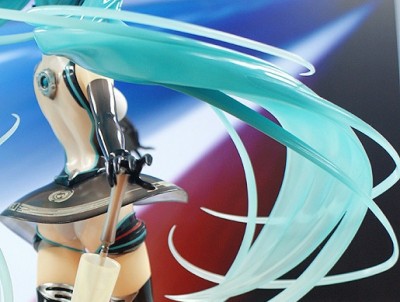
Miku Is Fun to Write About

The other day I read that Miku pitch from that Idea Channel show (which hangs with the PBS tag) and I was like, yeah another show mining eyecatching fringe otaku taglines. After watching it, though, it’s actually an honest investigation from a music perspective. Too bad it’s so short that you can’t really get much out of it.

I guess it’s not unlike console gamers and their alleged alligence to certain platforms, or lack thereof. I buy consoles purely based on the software. That’s why I own a 3DS. But I also buy consoles based on other considerations too, which is why I have a PS3. This multiplicity in terms of how and what makes sense to spend money on is something I believe most folks share, given that they have enough resources to consider different means of rationalizing their spending.

Do we treat these idols the same way? Identity aside I think the way we derive enjoyment from popular entertainment isn’t unlike the way we derive enjoyment from, well, consoles, which are also pop entertainment channels. In that aspect maybe Miku is just like one of the other typical, flesh-and-blood idols. In that aspect maybe it really is all about the music (software) for some people sometimes. But of course, the hardware matters too…

Rather than Lana Del Rey, I think someone like Shokotan is probably a better comparison. But then again how many top 10 Oricon albums did she sell versus Miku… Well, the comparison sticks for either one of them. The hardware will appeal to somebody, the software, who knows?

Clearly, Miku addresses a big lack of appealing hardware of a certain type. And by 2012 terminology, what I mean by hardware is more like ecosystem. And I’ve written some on that already.

I think for every Sharon Apple reference made for Miku, rather to think of it as some kind of silly “old school nod,” I think of it as an itch that is unscratched for ages. I’d go even as far that when Priss and her Replicants a few years prior, or even in Gibson’s Neuromancer line of novels, this itch was already a thing. Miku happened to scratch that itch. Perhaps not applied head on, she does help relieve some of that energy people have in terms of creating and projecting and identifying with some thing they want to be creating/identifying/etc.

Which is all to say, as an idol, Miku is for real. It’s just that it is we who write her story. Kind of like an open-source idol of sorts, and the repository is made of memes and moonrunes.